 Support


Warehouse lineage gets hard in exactly the place where teams expect it to be simple. Everybody knows the warehouse is supposed to be the organized layer of the stack. But once source systems feed staging tables, staging tables feed transformations, curated marts feed semantic models, and dashboards expose only the final result, the dependency picture becomes harder to explain than most teams expect. One warehouse object can sit in the middle of a much larger path than its name suggests.
That is why tracking lineage in a warehouse is not just about producing a diagram. It is about making the warehouse understandable enough that a team can answer two practical questions without guesswork: where did this value come from, and what else will change if this object is modified?
Start With The Business-Facing Layer
A common mistake is to begin warehouse lineage from the deepest technical layer. In practice, teams usually get faster value by starting closer to what the business actually consumes: curated marts, semantic models, published datasets, and the reports or KPIs tied to them.
That starting point does two useful things. First, it keeps the scope small enough to be realistic. Second, it anchors the lineage effort to assets that already matter for change review, trust, and reporting. Once the business-facing layer is visible, the upstream path becomes easier to trace in a way people care about.
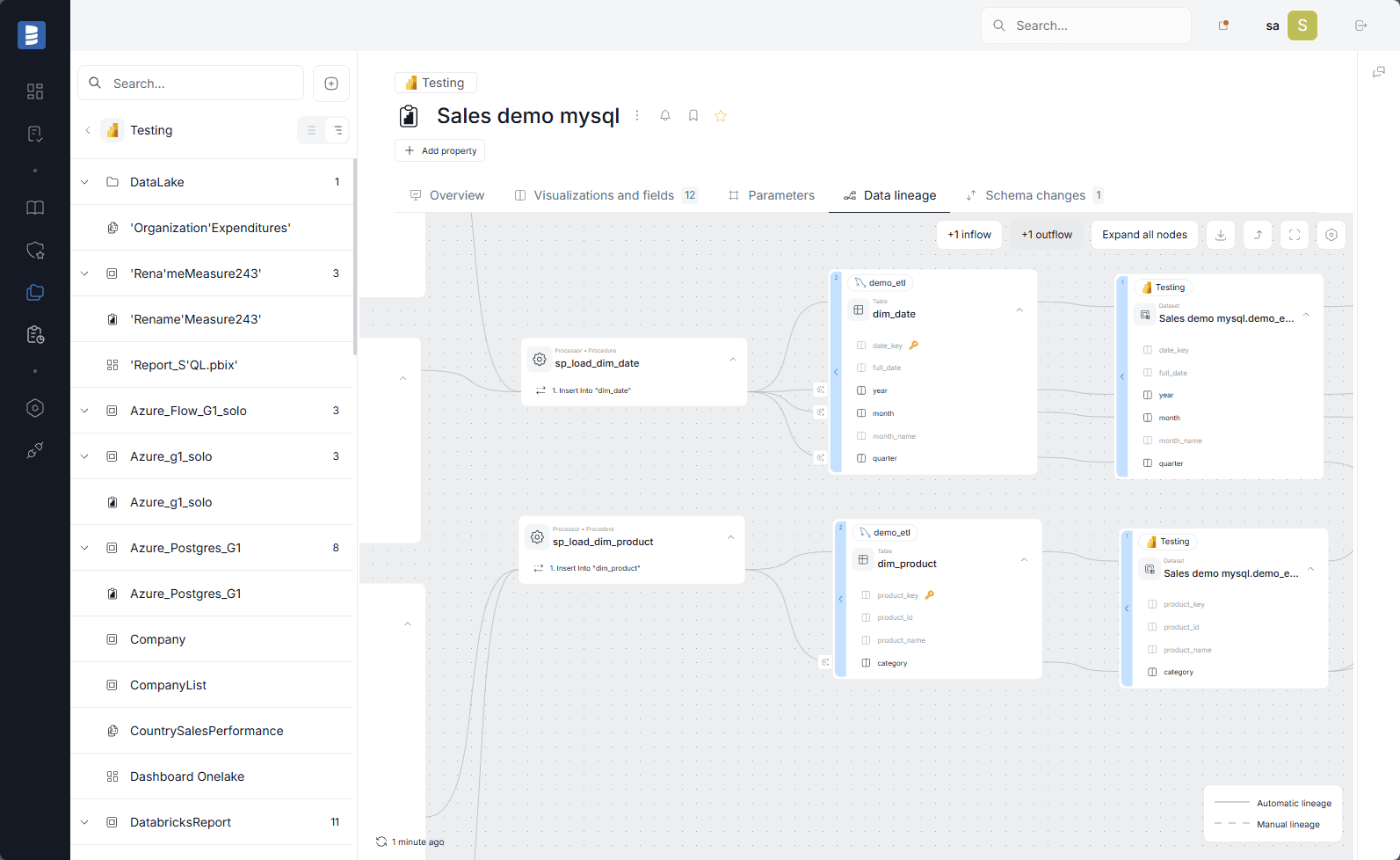 A warehouse lineage view should make the flow understandable quickly, not just technically complete.
Trace Back Through Warehouse Layers
Once the business-facing asset is identified, the next step is to walk upstream through the warehouse layers that shape it. That usually means following the path back through marts, views, transformation logic, staging layers, and eventually the systems that feed the warehouse in the first place.
This is where warehouse lineage becomes different from more generic lineage discussions. Warehouses are full of layers that look tidy on paper but hide important logic in practice. A view that seems simple may contain filters or joins that change the meaning of the result. A mart may look final but actually inherit assumptions from staging or transformation code that nobody remembered to document.
Tracking lineage in a warehouse therefore means documenting not only what is connected, but also which layer is responsible for shaping the business-facing output.
Decide Where Object-Level Stops Being Enough
Not every warehouse object needs the same depth of tracking. For broad dependency visibility, object-level lineage is often enough. It tells teams which tables, views, datasets, or reports are connected and gives them a useful first map.
The moment a change sits inside a specific field or calculation, however, that broader view stops being sufficient. Renamed columns, derived measures, filters, and field-level transformations are usually where warehouse teams need column-level lineage. If the question is about whether a KPI or report field will change, the answer often lives at the column path, not at the object box.
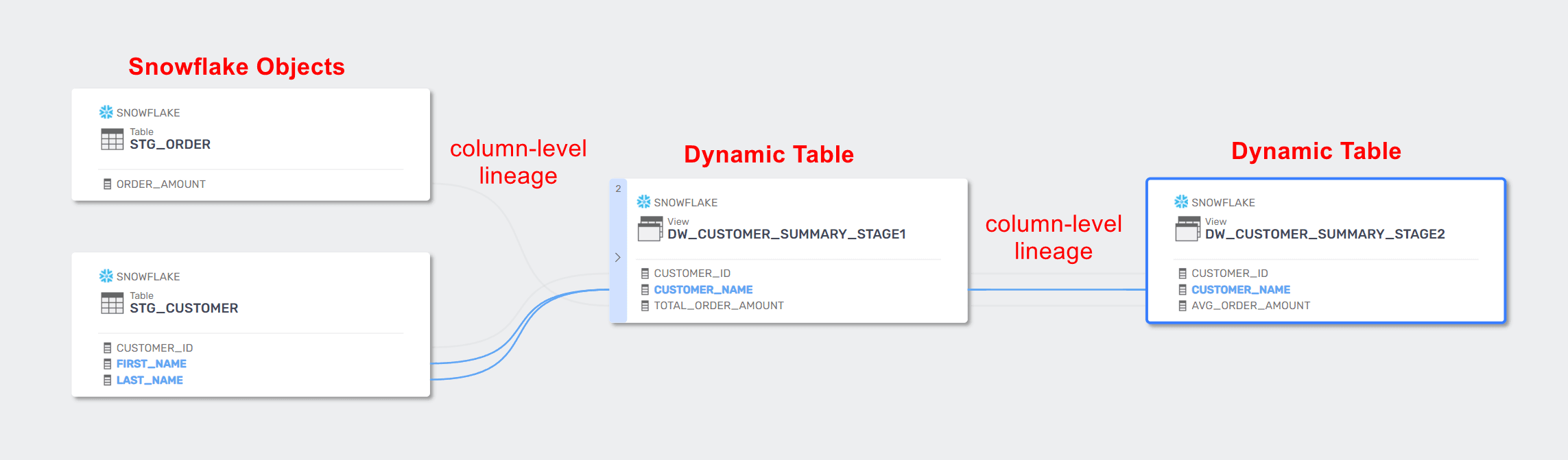 Column-level lineage is what turns a broad dependency map into a reliable review tool for field-level changes.
Add Context Before You Need It
Warehouse lineage gets much more useful when the path is paired with business meaning, ownership, and governance context. Without that, teams can see how data moves and still not know what the object is for, who should review a change, or why the path matters to the business.
That is especially important in warehouse environments because the warehouse often sits between raw source complexity and business-facing reporting. It is the place where teams most need a shared explanation of what a model supports, who owns it, and which governed terms or reporting paths depend on it.
Treat Schema Change As A Maintenance Trigger
Warehouse lineage goes stale quickly when teams treat it as a one-time documentation project. In practice, the drift starts with ordinary changes: a renamed column, a refactored view, a new mart, or a rebuilt report layer. That is why the maintenance question matters almost as much as the mapping question.
The strongest habit is to treat schema change as a trigger to re-check lineage. The review does not need to be heavy every time, but it does need to be part of the operating flow. Otherwise the warehouse may look documented while the dependency path quietly diverges from reality.
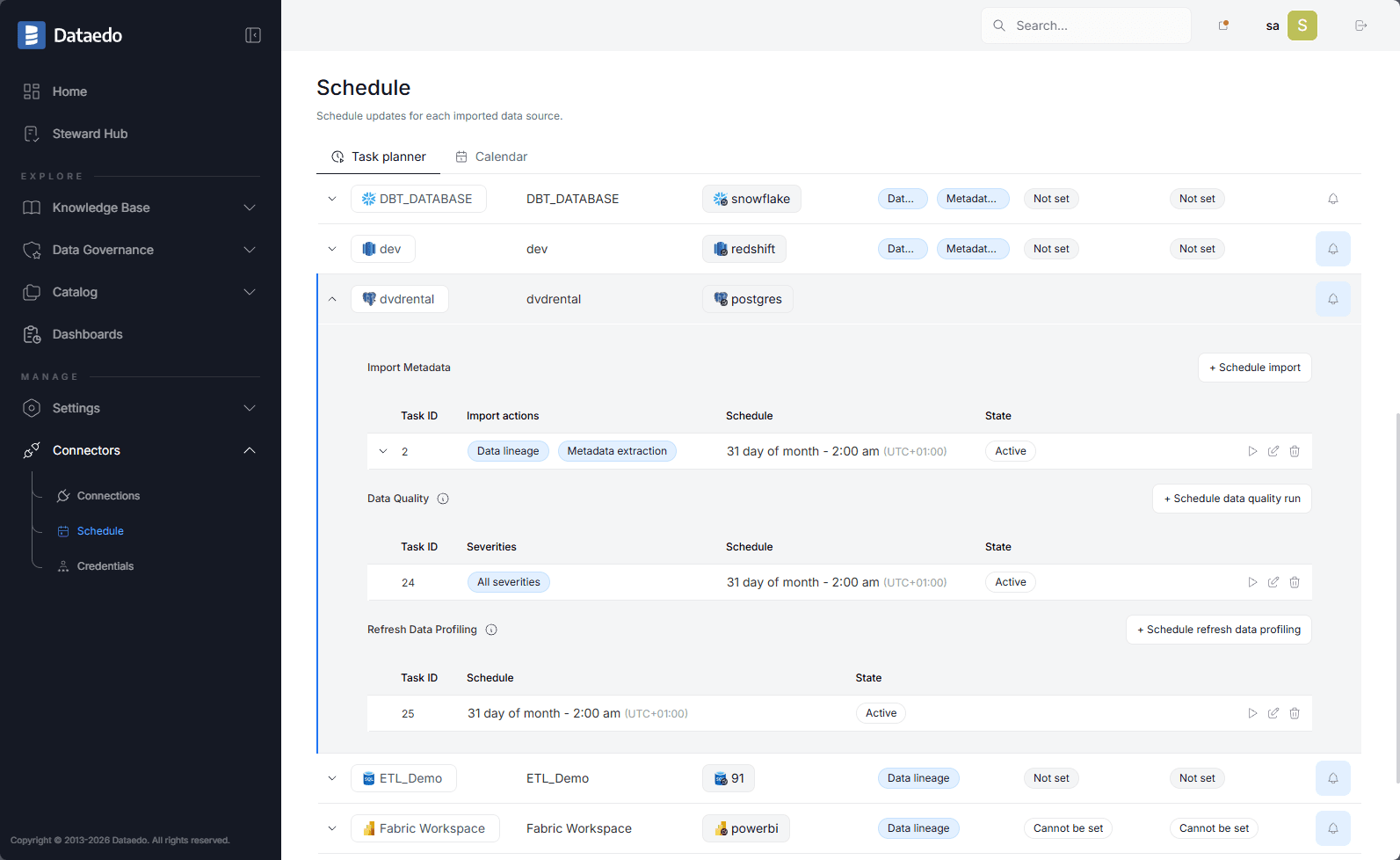 Keeping warehouse lineage current requires a repeatable refresh process, not one-time documentation effort.
Use The Map During Release Review
Warehouse lineage becomes operational when teams use it before changes go live. If a table, view, or field is about to change, the lineage map should help answer which downstream objects are affected, who needs to review the change, and whether the warehouse object supports reporting or business processes that deserve extra validation.
That is the difference between passive documentation and working lineage. A good warehouse map does not merely explain the system after the fact. It helps the team decide how safely the next change can be shipped.
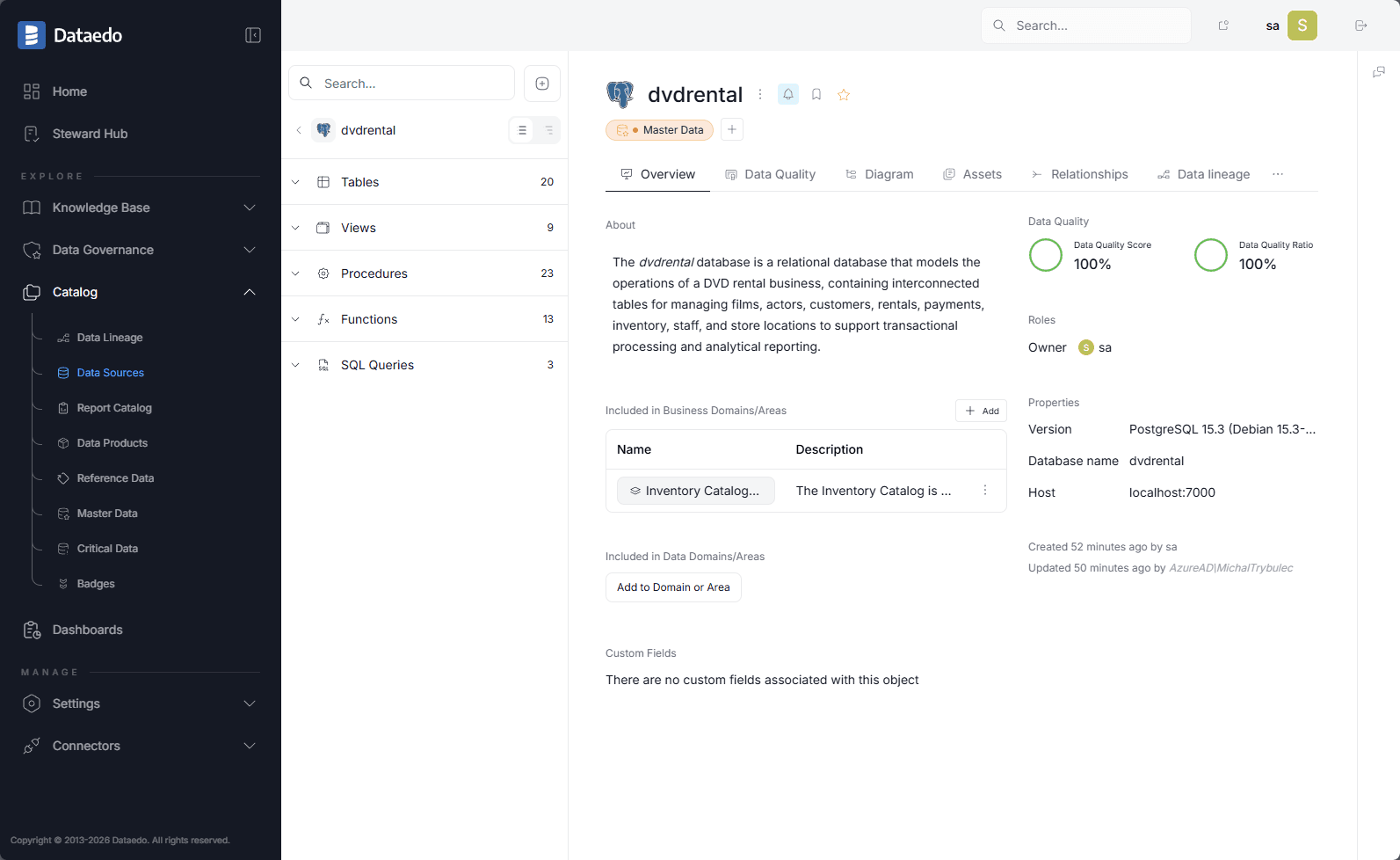 Warehouse lineage is more useful when the dependency path sits next to governance and ownership context.
What Warehouse Teams Often Miss
Warehouse teams usually underestimate three things. The first is how much important logic hides in staging and transformation layers rather than in the final mart. The second is how often views look simpler than they are. The third is that the warehouse is still not the end of the path; semantic models and reports continue the dependency chain into business use.
Quality context also matters here, but not because lineage and quality are the same thing. It matters because a warehouse path is easier to assess when the team can see both how data flows and whether a critical asset already looks unstable.
How Dataedo Helps
Dataedo helps warehouse teams by holding those layers together in one place. They can document tables and views, trace lineage at object and column level, use automatic and SQL-based lineage extraction where supported, connect glossary and ownership context, and keep the warehouse path close to the broader documentation model.
That matters because warehouse lineage is rarely just a technical asset map. Teams usually need to know what the object is, what it depends on, which business term or reporting path it supports, who owns it, and whether it still looks trustworthy enough to use. Dataedo is well suited to that combined warehouse workflow because it keeps the explanation and the dependency path close together.
FAQ
Do I need column-level lineage for every warehouse object?
No. Use object-level lineage for broad dependency visibility and column-level lineage when the change risk sits inside a field, measure, or transformation.
What is the biggest mistake teams make with warehouse lineage?
They document the final table or dashboard and ignore the upstream staging and transformation layers that actually explain the data flow.
Can lineage help with schema changes?
Yes. Lineage helps teams see what depends on the changed object before the change is released, which is the core of impact analysis.
Should lineage be documented separately from data quality?
No. They solve different problems, but warehouse teams usually need both together to understand whether the data is traceable and trustworthy.
Final Takeaway
Tracking lineage in a data warehouse is about making dependencies visible enough to trust the stack and change it safely.
Start with the most important warehouse assets, capture the upstream and downstream chain, add business context, and keep the map aligned with schema changes.
When lineage, quality, ownership, and glossary context live together, the warehouse becomes easier to understand and safer to evolve.
See how Dataedo helps teams track warehouse lineage, connect it to quality and ownership, and review downstream impact before changes go live. Book a demo or try for free now.
