 Support


Join 1000+ Satisfied Customers Using Dataedo
















Know what data feeds every model and how it changes over time
AI and ML models are only as reliable as the data that feeds them. Dataedo helps you trace training and prediction pipelines back to source data, document feature definitions, and show regulators or internal auditors how your AI systems use personal and sensitive information.
The challenge

Unclear feature origins
Teams know what goes into their models, but not exactly where those inputs come from, how they were transformed, or who owns them.
No end-to-end lineage
There’s no audit-ready, visual view of how data flows into, through, and out of AI models.
Rapid model iterations
Rapid model iteration leads to data and logic changes that aren’t reflected in documentation, creating risk and confusion.
Lack of governance
Without structured oversight, AI initiatives lack transparency, accountability, and regulatory readiness.
How Dataedo helps
Catalog AI-relevant data upstream
Connect Dataedo to data warehouses, feature stores, and batch/stream pipelines. Organize datasets under subject areas like Customer Risk or Fraud Detection.

Document model inputs and features
Use the Data Catalog to describe model features, feature-engineering logic, and business definitions. Link each model input back to underlying tables.

Build data lineage for ML pipelines
Use Automatic Data Lineage to visualize how raw data moves through preprocessing, feature engineering, and model retraining workflows.

Classify sensitive and regulated inputs
Use classification tags to mark features containing PII, financial data, or protected classes. Document masking rules and retention windows.

What you get

Clear AI data lineage
Understand exactly what data feeds each AI model, where it originates, and how it moves across systems.
Easier AI Risk & Compliance Reviews
Document data flows and dependencies in a structured, audit-ready format that supports regulatory and internal assessments.
Responsible AI by Design
Proactively identify, remove, or limit risky inputs to promote safer, more intentional model development.
Key features
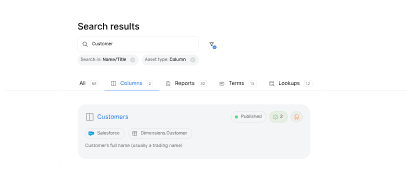
Data Catalog
Build a centralized inventory of AI-relevant data assets, documenting model inputs, feature definitions, and business context so teams clearly understand what data powers each AI system.

Data Lineage
Create a visual, end-to-end map of how data moves from source systems through preprocessing and feature engineering into AI models, providing a transparent and audit-ready view of model data flows.
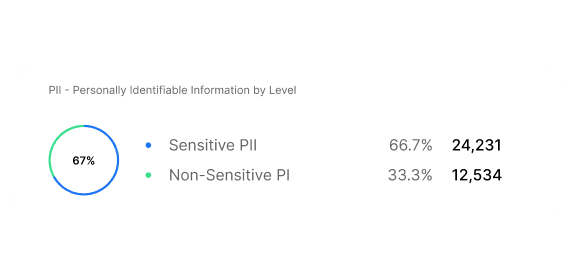
Sensitive Data Classification
Automatically identify and tag personal, financial, and other regulated data used in AI pipelines, helping you manage compliance risk and support responsible AI governance.
FAQs
What is AI governance?
AI governance ensures that AI initiatives are transparent, auditable, and compliant with organizational and regulatory standards. It covers model documentation, dataset context, lineage tracking, and monitoring for bias and performance.
How does Dataedo help with AI governance?
Dataedo supports AI governance by documenting model inputs, mapping upstream data sources, visualizing ML pipeline lineage, and classifying sensitive or regulated data. This creates transparency around how AI systems use data and strengthens accountability across teams.
Can Dataedo help with AI compliance and regulatory requirements?
Yes. Dataedo helps create an audit-ready view of AI data flows. You can classify PII, financial data, or protected attributes, document masking rules and retention policies, and clearly demonstrate how data is used in training and prediction pipelines.
How does Dataedo support AI risk assessments?
By providing clear data lineage and classification of sensitive inputs, Dataedo makes it easier to identify high-risk features, evaluate bias exposure, and document controls. This supports internal AI risk reviews and external regulatory assessments.
How does Dataedo prevent documentation drift in fast-moving ML environments?
Automatic Data Lineage and centralized metadata management keep documentation aligned with actual data structures. As pipelines evolve, lineage updates help reduce the risk of outdated or inaccurate AI documentation.
How does data classification improve responsible AI development?
Classifying sensitive attributes such as PII, financial data, or protected classes allows teams to intentionally limit, mask, or monitor risky inputs. This promotes responsible AI development and reduces legal and reputational risk.
Can Dataedo help with EU AI Act and regulatory compliance?
Yes. The EU AI Act and other emerging regulations demand transparency into the "black box" of AI. Dataedo’s automated data lineage creates a permanent audit trail. When an auditor asks which data sources were used to train a specific version of a model, you can generate a report showing the exact tables, filters, and feature engineering steps involved, proving you didn't use prohibited or non-compliant data.
Why our customers love Dataedo?
Dataedo is a lightweight solution with great customer service and active product development (recently data quality). The ability to run SQL scripts on the repository brings additional flexibility.

We jump started all of our Data Governance efforts using the tool. We documented key databases quickly and easily and published the information to our analyst community. The Dataedo team is dream to work with and very responsive.

Dataedo is easy to use, offers great functionality, and provides excellent customer service that always listens to the customer.

Dataedo is an amazing tool that continues to grow and improve.

Dataedo excels at data cataloging, and the support from the Dataedo team is top-notch.

Datedo consistently improves while delivering exceptional support that is quick, competent, and highly reliable.

Dataedo provides ease of use and covers so many areas from a Data Governance perspective. You really can put everythng in one place.

Dataedo is a fantastic tool, and I love working with it—especially with the continuous improvements being made and planned.


Piotr Kononow
Founder
Govern your AI models the same way as BI reports
Explore Dataedo through a preconfigured data catalog with sample data, try it with your own data during a 14-day free trial, or book a demo.