 Support


Join 1000+ Satisfied Customers Using Dataedo
















Govern model inputs with catalog, lineage, and PII classifications
AI models only perform reliably when they consume governed, well-understood data. Dataedo catalogs upstream datasets, traces feature engineering pipelines with lineage, and classifies sensitive inputs, so your AI team builds models that regulators, auditors, and stakeholders can trust.
The challenge

Undocumented data feeding models
AI models rely on features sourced from tables that lack proper documentation, ownership, and data quality visibility. This increases operational and regulatory risk.
No visibility into sensitive inputs
There is no clear view of which PII, financial data, or protected attributes flow into training pipelines, making risk exposure difficult to assess.
Pipeline drift & model instability
Feature engineering workflows evolve quickly, creating undocumented changes that introduce drift and quietly degrade model performance.
No proof for auditors
When regulators or internal auditors ask for evidence that prohibited data sources aren’t used, teams struggle to provide clear, traceable documentation.
How Dataedo helps
Catalog all AI upstream data
Connect Dataedo to data warehouses, feature stores, and batch/stream sources. Organize training datasets under subject areas like Customer Risk or Fraud Detection.

Document features in business language
Use the Data Catalog and Business Glossary to define model inputs in clear, business-friendly terms. Capture definitions, calculation logic, and quality notes so both technical and non-technical stakeholders understand exactly what each dataset represents and how it’s used in AI models.

Build end-to-end AI pipeline lineage
Use Data Lineage to trace raw source tables through preprocessing, feature engineering, and model retraining workflows. Create a clear, visual map of how data flows into AI models to support transparency, impact analysis, and audit readiness.

Classify and govern sensitive model inputs
Apply classification tags to mark PII, financial data, or protected attributes in training features. Document masking rules and exclusion decisions.

What you get

Compliant AI models
Provide auditors with a full view of your AI ecosystem by showing exactly which data feeds and inputs each model uses, ensuring complete transparency and traceability.
Reliable model performance
Avoid unexpected outcomes by monitoring upstream data changes and guaranteeing that every model performs consistently.
Faster AI governance reviews
Accelerate your compliance workflows by generating detailed, up-to-date documentation directly from your live model catalog, reducing manual effort and review cycles.
Key features
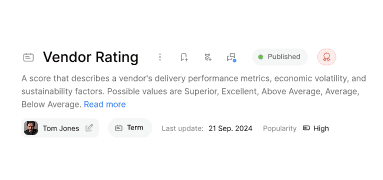
Business Glossary
Define and document model features in clear business language, including definitions, calculation rules, and quality notes, so your team and auditors understand exactly what each input represents.

Data Lineage
Trace every feature from raw source tables through feature engineering and model training workflows, giving you a complete, end-to-end view of how data flows into your AI models.
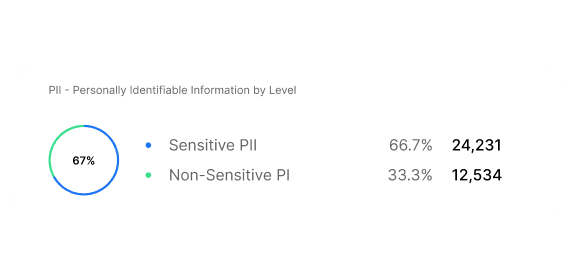
Sensitive Data Classification
Identify and label PII, financial data, or protected attributes in model inputs, including masking rules and exclusion decisions, to ensure your AI models comply with privacy and regulatory requirements.
FAQs
What is AI-ready data and why is it important?
AI-ready data is well-governed, documented, and high-quality data that can be reliably used to train AI models. It ensures consistent model performance, reduces bias, and helps teams meet regulatory requirements.
How does Dataedo improve AI model reliability?
AI models are only as good as the data they consume. Dataedo provides a unified data catalog that documents the source, quality, and definition of every feature used in your models. By understanding the "why" and "how" behind your data, data scientists can avoid using corrupted or irrelevant datasets, significantly reducing model drift and unexpected failures.
What is AI data lineage and why is it important?
AI data lineage is the visual map of how data moves from raw source systems through feature engineering and into your training sets.
It is critical for compliance and model debugging because it provides a transparent audit trail. If a model produces biased or inaccurate results, lineage allows your team to trace back to the exact transformation or source table where the data was altered, saving weeks of manual troubleshooting.
It is critical for compliance and model debugging because it provides a transparent audit trail. If a model produces biased or inaccurate results, lineage allows your team to trace back to the exact transformation or source table where the data was altered, saving weeks of manual troubleshooting.
Can you manage "Model Drift" using data lineage?
Model drift often happens because of undocumented changes in upstream data (e.g., a column name changes or a sensor starts sending null values). By using End-to-End Lineage, your data teams get an early warning system. You can trace a failing model back to its data dependencies to see exactly which pipeline change broke the performance, reducing "Mean Time to Repair" (MTTR) for AI incidents.
Why is metadata management critical for AI Agents?
AI agents and LLMs rely on RAG (Retrieval-Augmented Generation) to provide accurate answers. If your metadata is messy, the agent will retrieve the wrong context. Dataedo ensures that your "business glossary" is synchronized with your data catalog, providing the semantic layer that AI agents need to understand the difference between "Gross Revenue" and "Net Profit" before they answer a stakeholder's question.
Why our customers love Dataedo?
Dataedo is a lightweight solution with great customer service and active product development (recently data quality). The ability to run SQL scripts on the repository brings additional flexibility.

We jump started all of our Data Governance efforts using the tool. We documented key databases quickly and easily and published the information to our analyst community. The Dataedo team is dream to work with and very responsive.

Dataedo is easy to use, offers great functionality, and provides excellent customer service that always listens to the customer.

Dataedo is an amazing tool that continues to grow and improve.

Dataedo excels at data cataloging, and the support from the Dataedo team is top-notch.

Datedo consistently improves while delivering exceptional support that is quick, competent, and highly reliable.

Dataedo provides ease of use and covers so many areas from a Data Governance perspective. You really can put everythng in one place.

Dataedo is a fantastic tool, and I love working with it—especially with the continuous improvements being made and planned.


Piotr Kononow
Founder
Trustworthy AI starts with trustworthy data
Explore Dataedo through a preconfigured data catalog with sample data, try it with your own data during a 14-day free trial, or book a demo.