 Support


Join 1000+ Satisfied Customers Using Dataedo
















Find customer data in seconds, not hours
Customer data is spread across CRMs, billing systems, data warehouses, and data lakes. Dataedo brings it together in one searchable catalog linked to a shared business glossary, so everyone can quickly find the right tables and know exactly what each field means.
The challenge

Unclear source of truth
Teams often don’t know which system holds the “right” customer information, leading to uncertainty and delays in analysis.
Confusing columns
Columns like customer_id, cust_id, or client_id create ambiguity, making it hard to join tables correctly and trust results.
Dependence on senior team members
New analysts frequently rely on experienced colleagues to navigate complex or legacy schemas, slowing onboarding and productivity.
Misunderstood fields
Incorrect interpretations of fields can result in wrong joins, inaccurate reports, and misleading business insights.
How Dataedo helps
Import metadata
from all customer-related systems
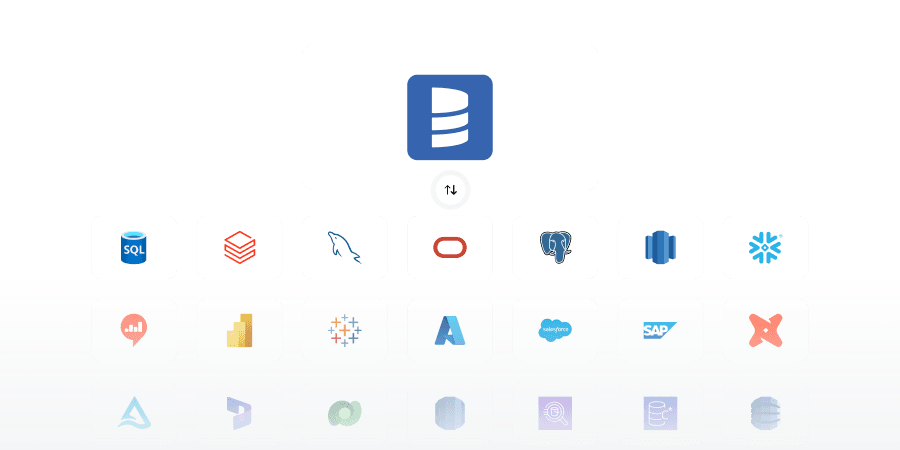
Connect to your CRM, billing, support, and warehouse databases. Automatically pull in tables, columns, keys, and relationships. Organize them into domains and data products like "Customer 360."
Build a shared business glossary
for customer concepts
Use Business Glossary to define terms like Customer, Active Customer, Churned Customer, and Account in business language. Link each term to the physical tables and columns where it's implemented.

Enrich technical metadata
with clear descriptions
Add explanations to confusing table and column names. Mark primary keys, foreign keys, and important relationships. Use tags (e.g., "Master," "Reference") to highlight the most important datasets.

Enable self-service discovery
in the catalog
Publish to the Dataedo Web Portal so users can search by business term ("Customer") and jump straight to relevant data assets. Show definitions and usage guidelines alongside the technical schema.

What you get

Faster data discovery
Locate the right customer data in seconds, reducing time spent searching across multiple systems and sources.
Fewer mistakes
Ensure analysts use the correct tables and joins from the start, minimizing errors and improving data accuracy.
Shared understanding
Create a common language between business and technical users so everyone interprets data consistently and confidently.
Key features

Business Glossary
Centralize all business terms and definitions in one place so teams consistently understand key concepts. Link terms to datasets, track updates over time, and ensure everyone interprets customer data the same way.

Knowledge Base
Organize your data into subject areas like Customer 360, Billing, or Support. Provide context, guidelines, and best practices so teams can quickly find and correctly use the data they need.
Powerful search
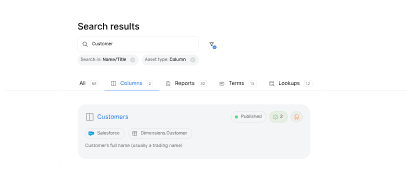
Search across all your customer data using business terms, technical names, or tags. Instantly find the right tables, columns, and definitions, reducing time spent navigating complex systems.
FAQs
What is customer data discovery and why is it important?
Customer data discovery is the process of finding, understanding, and organizing all customer-related data across systems like CRMs, billing platforms, data warehouses, and data lakes. It helps teams reduce errors, save time, and make data-driven decisions with confidence.
How does a data catalog support customer data discovery?
A data catalog centralizes metadata from all systems, documenting tables, columns, relationships, and keys. It makes it easy for analysts, business users, and data engineers to find the right data quickly and understand how it’s used.
How does customer data discovery support self-service analytics?
By making datasets, definitions, and lineage easy to find, business users can explore and analyze data independently, reducing reliance on IT teams and accelerating data-driven decisions.
How does customer data discovery support compliance with regulations like GDPR and CCPA?
By cataloging all customer data, tracking lineage, and classifying sensitive information such as PII, Dataedo ensures you know where personal data resides and how it’s used. This makes it easier to meet GDPR, CCPA, and other privacy regulations, document compliance, and respond to audits or data subject requests.
Why our customers love Dataedo?
Dataedo is a lightweight solution with great customer service and active product development (recently data quality). The ability to run SQL scripts on the repository brings additional flexibility.

We jump started all of our Data Governance efforts using the tool. We documented key databases quickly and easily and published the information to our analyst community. The Dataedo team is dream to work with and very responsive.

Dataedo is easy to use, offers great functionality, and provides excellent customer service that always listens to the customer.

Dataedo is an amazing tool that continues to grow and improve.

Dataedo excels at data cataloging, and the support from the Dataedo team is top-notch.

Datedo consistently improves while delivering exceptional support that is quick, competent, and highly reliable.

Dataedo provides ease of use and covers so many areas from a Data Governance perspective. You really can put everythng in one place.

Dataedo is a fantastic tool, and I love working with it—especially with the continuous improvements being made and planned.


Piotr Kononow
Founder
Find customer data in seconds, not hours
Explore Dataedo through a preconfigured data catalog with sample data, try it with your own data during a 14-day free trial, or book a demo.