 Support


The easiest way to explain impact analysis is to start with a change that looks small and is not. Imagine a team wants to rename customer_id to account_id in a shared warehouse model. On the surface, that sounds like a straightforward cleanup. In practice, that one rename may affect a transformation layer, a semantic model, several reports, a glossary term tied to a KPI, and the owners who are expected to sign off before release. The hard part is not finding one dependency. The hard part is deciding whether the change is safe to ship.
That is what impact analysis is for. In a modern data stack, it is less a document than a release decision workflow built on top of lineage and metadata.
Start With A Precise Change
Impact analysis breaks down quickly when the proposed change is fuzzy. “We are refactoring the model” is not enough. The team needs to know what is changing, where it sits in the stack, and whether the change affects structure, logic, naming, or meaning.
That is especially important in modern stacks because one edit can move through warehouse tables, transformation models, semantic layers, BI outputs, and governed terms. If the change description is vague, every later step becomes vague too. If the change is clear, the review has a chance of becoming useful.
Map The First Dependency Ring
Once the change is defined, the first job is to map the direct dependencies. The question here is not yet “what is the full blast radius?” It is “what obviously consumes this object today?” That first ring usually includes upstream sources, downstream tables or views, dashboards, reports, governed terms, and the people expected to review the change.
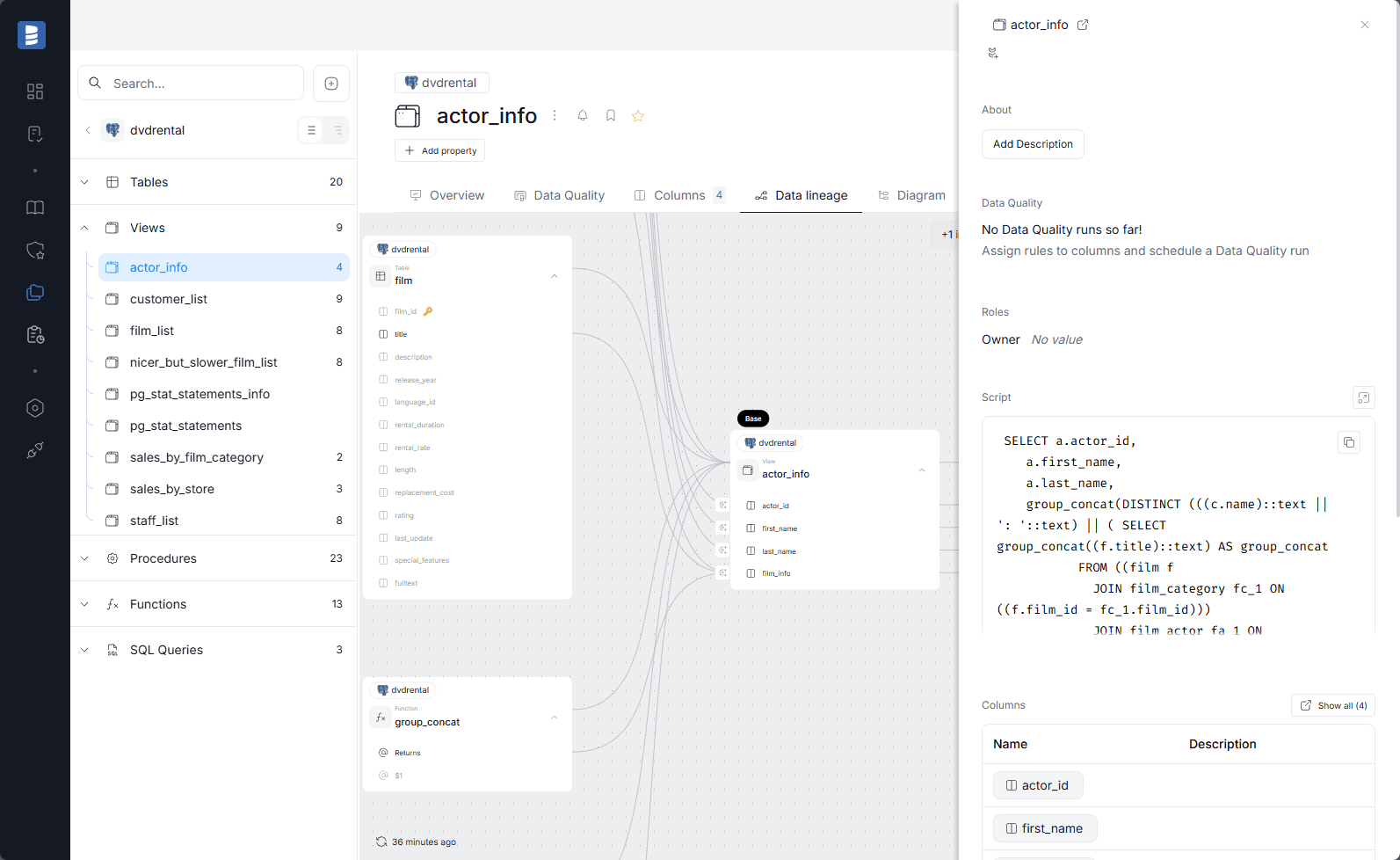 A SQL-to-lineage view helps teams move from a changed object to its first-order dependency map quickly.
For many changes, that first map is already enough to decide next steps. For others, especially field-level changes, it is only the beginning.
Then Go Deeper Than Object Level
Modern stack changes rarely stop at object level alone. A field can be renamed, cast, filtered, aggregated, or reused in a downstream measure without breaking the parent table in an obvious way. That is why column-level lineage matters so much in release work. Object-level lineage gives you the map, but column-level lineage tells you whether the change reaches a calculation, a filter, a measure, or a published field that someone cares about.
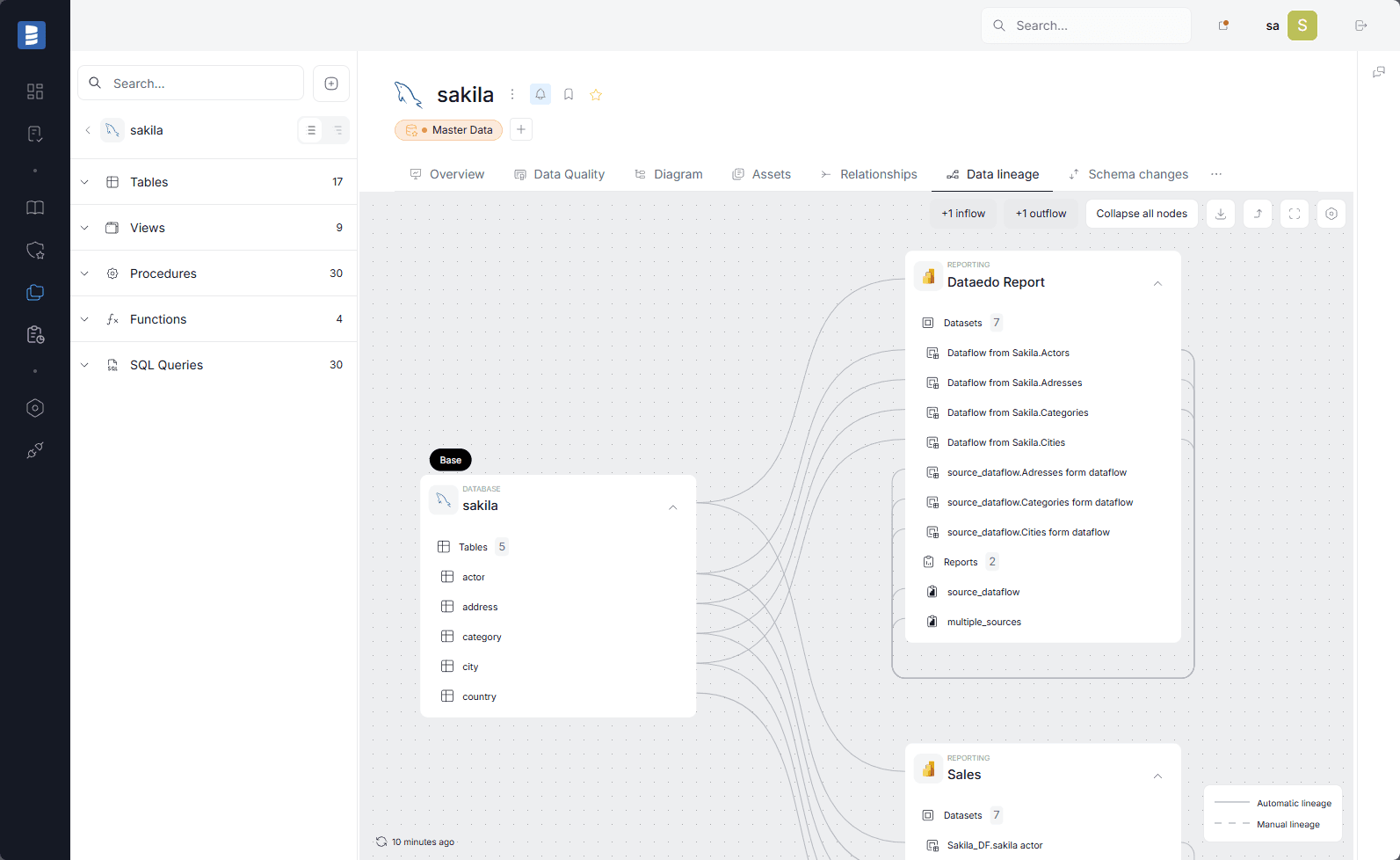 A workflow-oriented lineage view helps teams see whether the change is local or flows into broader downstream analysis paths.
The moment the team sees that the field is reused in a downstream calculation or exposed in a business-facing report, the question changes. It is no longer only “what is connected?” It becomes “what matters if this path changes?”
Add The Business And Ownership Layer
Technical dependencies are never enough for a release decision. The team also needs to know whether the object supports a critical report, whether a glossary term is tied to it, and who owns the asset or downstream consumer path. That is the moment impact analysis stops being a search exercise and becomes a decision exercise.
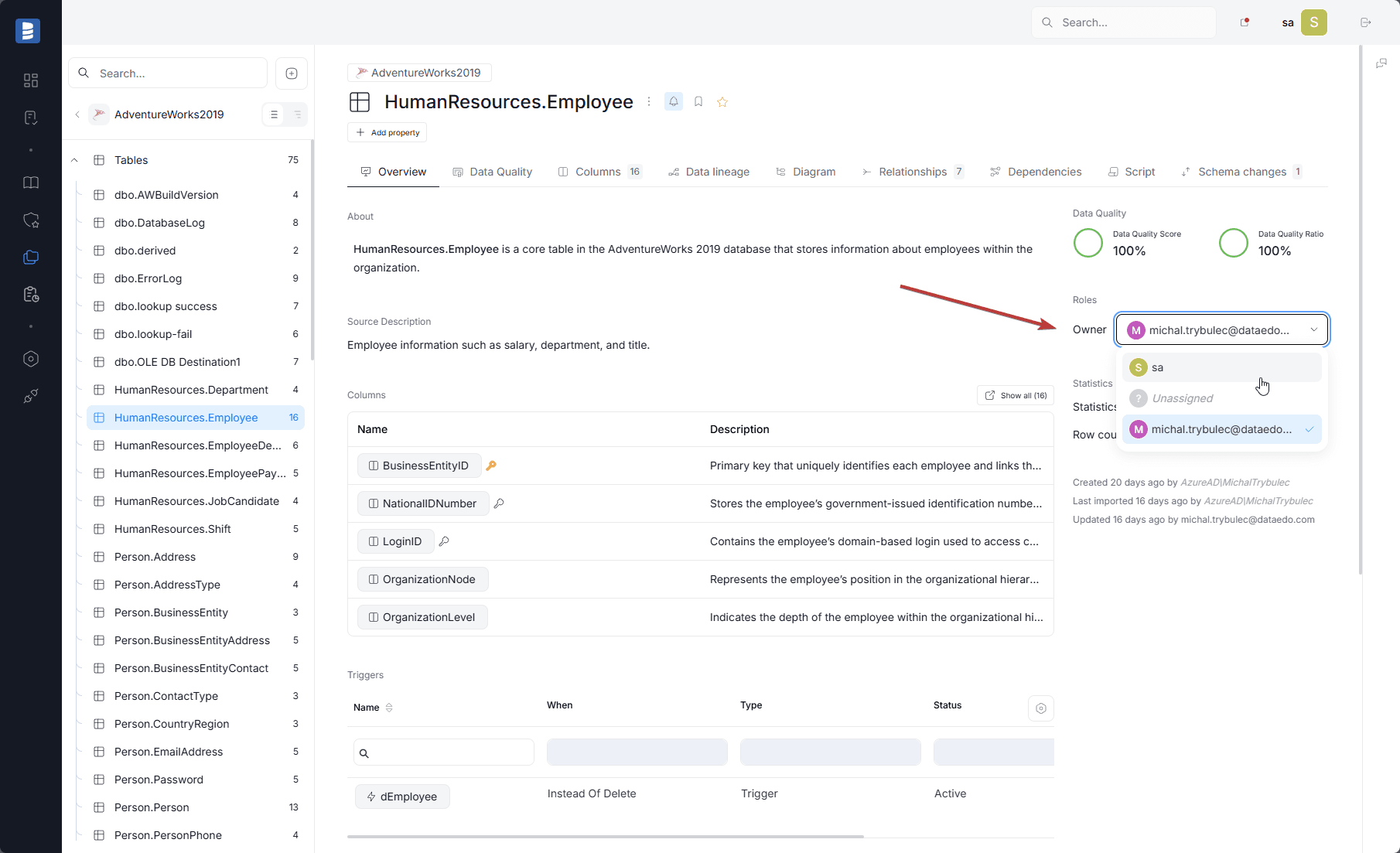 Ownership context helps teams decide who needs to validate or approve a change before it moves forward.
At that point, teams can classify risk. A local refactor with no visible consumers is one thing. A shared model behind executive reporting is another. The purpose of the classification is not bureaucracy. It is to decide how much validation, communication, and review the release deserves.
End With A Release Decision
Good impact analysis always ends with an action. Sometimes the answer is to proceed as planned. Sometimes it is to widen testing, notify downstream owners, document the object before releasing the change, or delay the rollout until the dependency picture is clearer. The important part is that the analysis changes the release decision rather than ending as a passive diagram review.
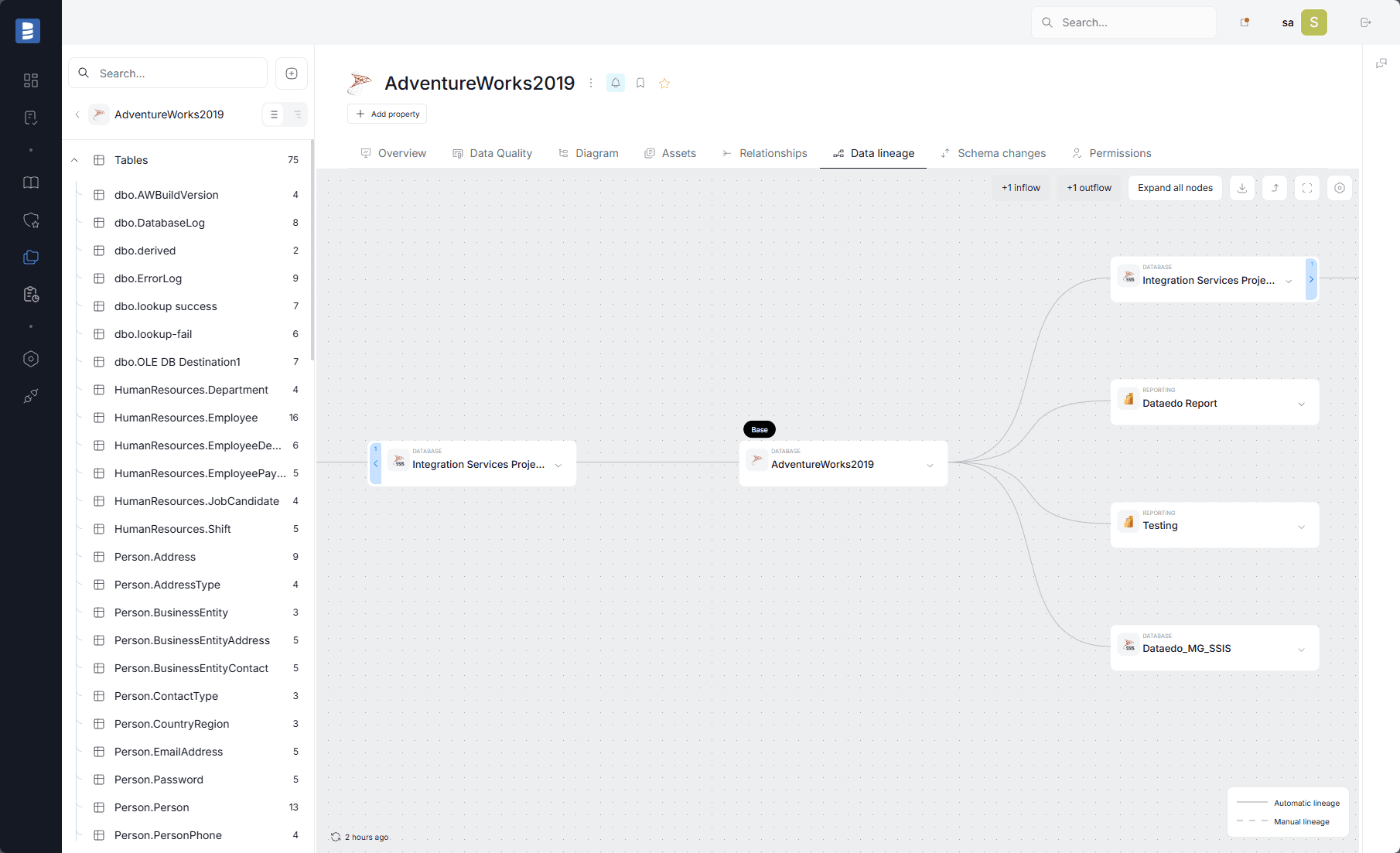 A full dependency view helps teams decide whether to proceed, widen validation, notify downstream owners, or hold the release.
What Good Impact Analysis Feels Like
In a strong workflow, impact analysis is not a last-minute scavenger hunt. It feels more like a structured release conversation. Someone proposes a change, the team checks the dependency path, they identify who should validate it, they review the business meaning of the affected assets, and only then do they decide how the release should proceed.
The common failure modes are predictable. The lineage is incomplete, the ownership is undocumented, the team only checks the obvious dashboard and misses deeper consumers, or the whole review starts too late to change the release plan. The biggest mistake is to treat impact analysis as if it were only a search task. Search tells you where an object appears. Impact analysis tells you what the planned change means.
How Dataedo Helps
Dataedo helps by putting the relevant layers of that release conversation together. Teams can find the object, review lineage across objects and columns, see who owns the asset, connect it to business terms, and check surrounding trust context in one place instead of stitching the picture together from scattered tools and screenshots.
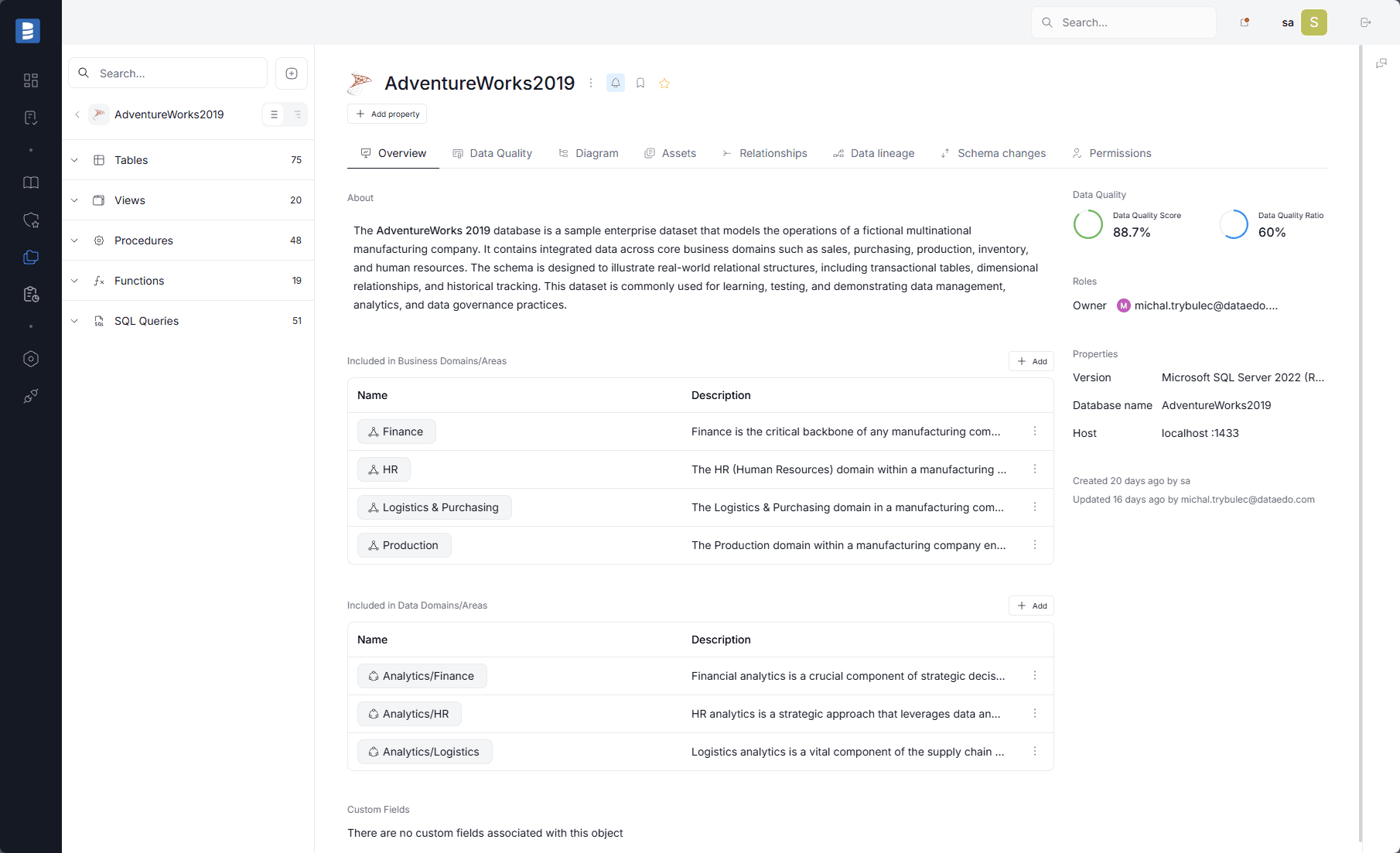 Impact analysis becomes repeatable when the path, ownership, and related governance context are visible in the same review workflow.
That is what turns impact analysis from a manual checklist into a repeatable release practice. It matters most when the change touches shared or business-critical logic, because that is where the cost of blind releases rises fastest.
FAQ
Is impact analysis the same as data lineage?
No. Lineage shows dependencies. Impact analysis uses those dependencies to assess what a planned change might affect.
Do you need column-level lineage for impact analysis?
Not always, but it is often important when the change affects fields used in calculations, filters, or downstream reports.
Can impact analysis be done manually?
Yes, but manual review is slower and easier to miss hidden dependencies or ownership context.
What makes impact analysis useful in modern stacks?
It reduces release risk by connecting lineage, glossary, ownership, and quality context before the change goes live.
Final Takeaway
Impact analysis helps teams see the downstream effect of a change before it ships.
In a modern data stack, that means checking lineage, business meaning, ownership, and quality context together instead of guessing from one layer alone.
When those layers are connected, release decisions become faster, safer, and easier to explain.
See how Dataedo helps teams review impact with catalog, lineage, glossary, ownership, and data quality context in one workflow. Book a demo or try for free now.

