 Support


Change impact analysis starts when a team realizes that a change is no longer only local. A renamed column, a refactored view, a metric adjustment, or a pipeline update may look small inside one file or one model. The real question is what happens after that change leaves the immediate object and reaches downstream reports, business terms, governed datasets, or users who expect the output to stay stable.
That is what change impact analysis is for. It is the release-time discipline of tracing consequences before the change goes live, so the team is not discovering the blast radius after deployment.
It Is A Release Decision, Not Just A Diagram
The easiest mistake is to think impact analysis means collecting a long list of dependencies. That list matters, but it is not the end goal. The point is to decide whether the change is safe to ship, who should review it, what needs validation, and whether the business meaning of the output may shift along with the technical implementation.
In data work, the triggering change can be almost anything: a column rename, a datatype change, an updated SQL view, a model refactor, a transformation tweak, or a reporting metric adjustment. What makes the review useful is not the type of change. It is the decision pressure around the change.
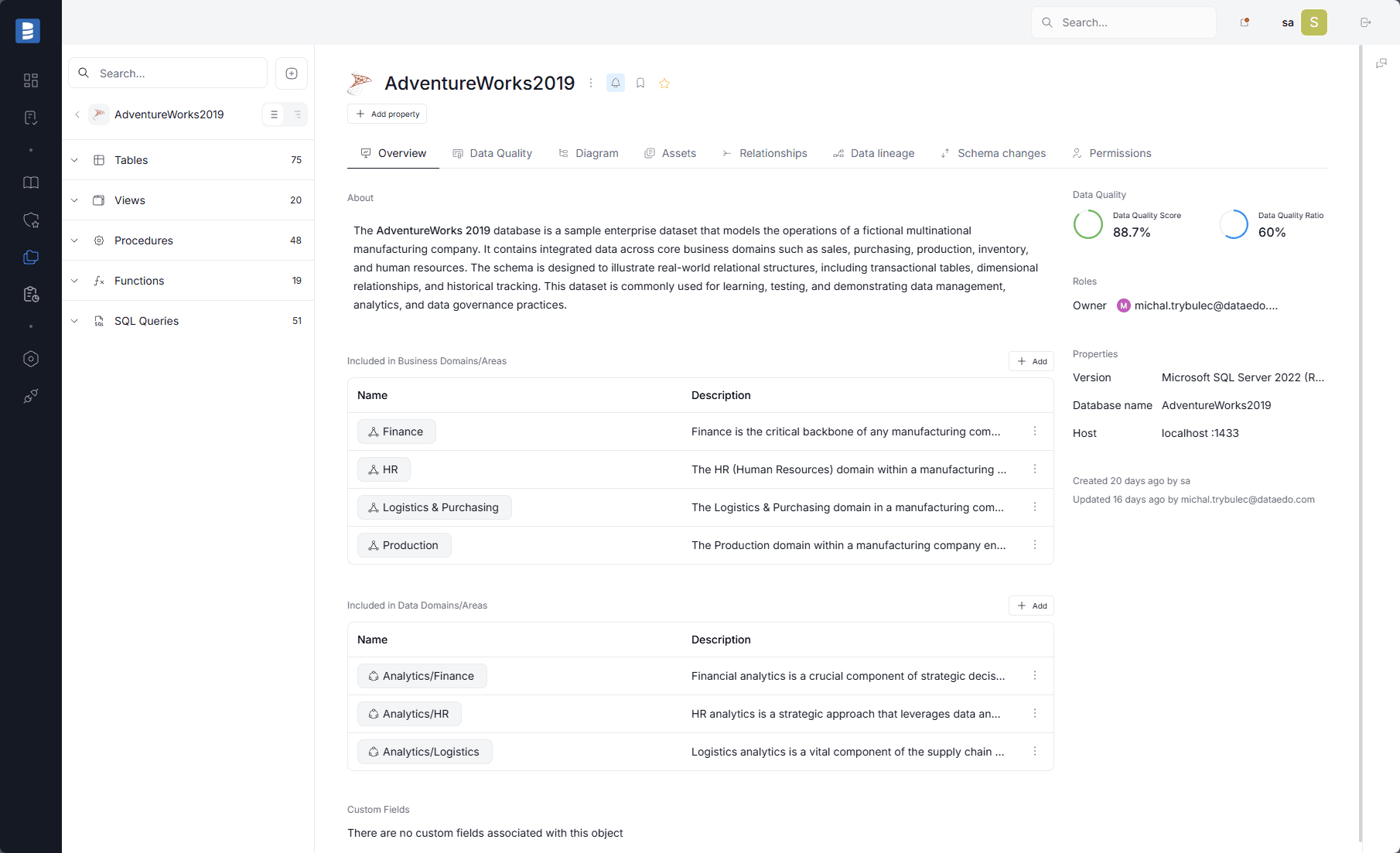 Documented asset page in Dataedo showing object context, ownership, quality signals, and related governance metadata before a release review.
Where It Fits In Daily Work
People often use impact analysis as a broad term, but change impact analysis is more specific. It is the review you run before a release, refactor, migration, or model change. Data lineage gives the team the map. Impact analysis turns that map into a release decision.
That distinction matters because modern data stacks are layered. A single upstream change may reach source tables, transformation models, semantic layers, reports, glossary terms, and the business users who depend on the result. Without a structured review, teams fall back to memory, message threads, and last-minute script searches. That is usually when a downstream report breaks, a KPI changes without explanation, or the team delays the release because the risk is still too vague.
A Better Way To Run The Review
The review does not need to be bureaucratic, but it does need to be precise. The first requirement is to define the exact object and exact change. If the change description is fuzzy, every later step becomes fuzzy as well.
From there, the team should map the direct technical dependencies first. That gives them the initial shape of the blast radius: upstream sources, intermediate objects, downstream models, dashboards, and reusable logic that consumes the asset.
Then comes the point where many reviews become either strong or weak. If the risk sits inside a field, a calculation, a join, or a filter, object-level lineage stops being enough. Column-level lineage is what shows whether a rename or transformation change reaches a report field, a KPI path, or a business-facing calculation.
After that, the review needs business context. Technical dependencies alone cannot tell the team whether the change affects a glossary term, a governed KPI, a sensitive asset, or a high-visibility output. Ownership, stewardship, glossary links, and surrounding trust context are what convert a dependency review into an actual change decision.
Only then does risk classification become meaningful. The purpose of classification is not to label the change for its own sake. It is to decide whether the team should proceed, widen testing, notify downstream owners, update documentation first, or hold the release until the dependency picture is clearer.
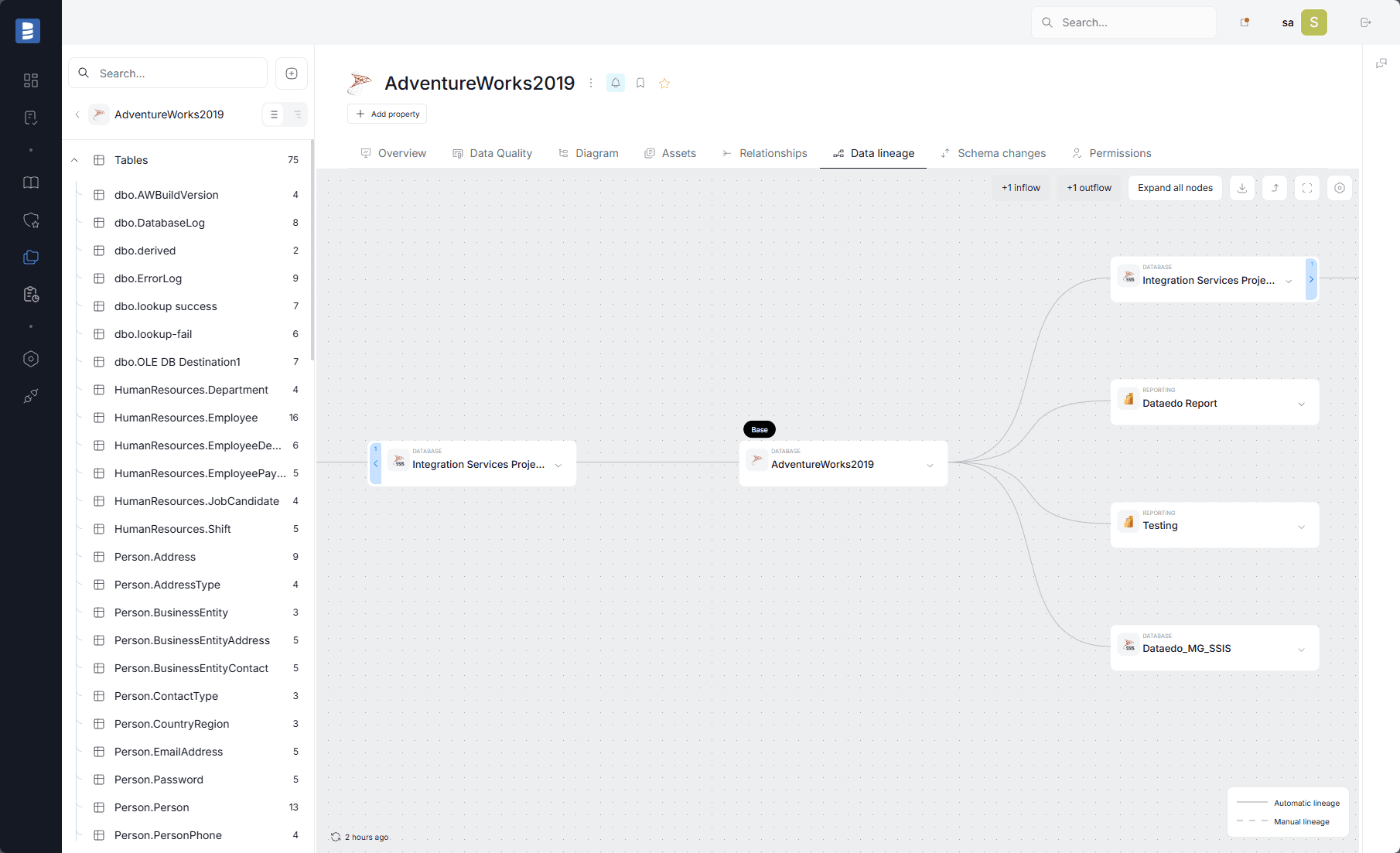 End-to-end lineage view used to review upstream and downstream dependencies before changing a shared object or field.
Where Teams Usually Go Wrong
The most common failure is not that teams skip impact analysis entirely. It is that they do only part of it and mistake that for a safe review. They check one visible dependency but not the deeper field path. They review the technical object but not the governed meaning. They know the path but not the owner. Or they start the review so late that even a good analysis can no longer change the rollout plan.
Incomplete lineage, undocumented ownership, disconnected glossary terms, and purely manual dependency checks all create the same outcome: a release decision that looks informed but still carries hidden risk.
How Dataedo Helps
Dataedo helps by putting the metadata that matters for the review in one place. Teams can find the affected asset, trace lineage at object and column level, connect the technical path to glossary meaning, see ownership and stewardship context, and check surrounding quality signals before deciding how to move forward.
That is where change impact analysis becomes more than an ad hoc check. It becomes a repeatable release workflow with enough context to support safer decisions.
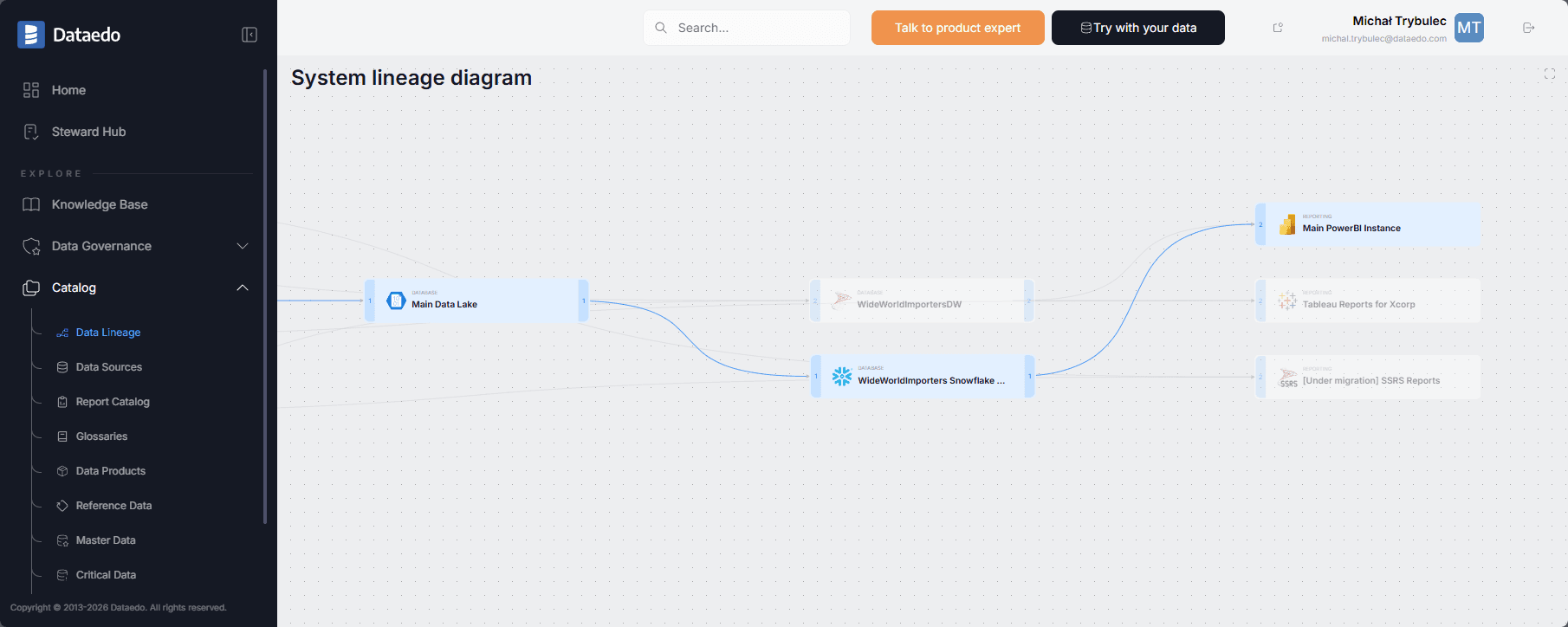 System-level lineage and impact context used before release to review downstream dependencies and validation scope.
When It Matters Most
Change impact analysis becomes most valuable when the change touches shared logic or business-critical outputs: warehouse schema changes, SQL refactors, model updates, report logic, semantic layers, and compliance-sensitive data paths. The more shared the asset, the more important the review becomes, because the cost of uncertainty rises with every downstream consumer.
FAQ
Is change impact analysis the same as data lineage?
No. Lineage shows relationships. Change impact analysis uses those relationships to assess the effect of a planned change.
Is object-level lineage enough?
Usually not. Object-level lineage gives you the big picture, but column-level lineage is often needed for safe release decisions.
What makes change impact analysis useful in governance?
It connects technical dependencies to ownership, business meaning, and quality signals, so teams can make change decisions with more confidence.
Can you do impact analysis manually?
Yes, but it is slower and less reliable. Manual review usually misses hidden dependencies or business context.
Final Takeaway
Change impact analysis is the habit of checking consequences before you ship a change.
When lineage, glossary, ownership, and quality context are connected, teams can move faster without breaking downstream work.
See how Dataedo helps teams review downstream impact before release with catalog, glossary, lineage, ownership, and data quality context. Book a demo or try for free now.

