 Support


Teams often use provenance, lineage, and traceability as if they were interchangeable, especially when a governance or audit conversation becomes technical. In practice, they overlap, but they do not do the same job.
That matters because the chosen term shapes the question a team thinks it is answering. If someone asks for lineage, they are often asking for the visible path through systems and transformations. If someone asks for provenance, they are usually asking for something broader: not only how the data moved, but where it originated, what history surrounds it, and what gives it trust or evidentiary weight.
The Simplest Useful Distinction
The exact definitions vary by industry, so the important thing is not academic purity. It is consistent use inside the organization. A practical working distinction looks like this:
Data provenance is the broader origin story of the data: where it came from, what created it, what transformed it, and what surrounding context supports trust in that story.
Data lineage is the documented path the data follows across systems, tables, columns, reports, and transformations.
Data traceability is the ability to move backward or forward through that documented path when a team needs to investigate, explain, or audit something.
In day-to-day work, lineage is usually the most visual concept. Provenance is broader and more contextual. Traceability is the practical act of following the chain.
What Each Term Is Trying To Answer
The cleanest way to separate provenance from lineage is to look at the question each one serves.
Provenance asks: where did this data really come from, what happened to it, and what context helps us trust that story?
Lineage asks: what path did this data take through systems and transformations?
Traceability asks: can we actually follow that path backward or forward when we need to explain something?
| Concept | Best question to ask | What it usually covers | What it does not cover well |
|---|---|---|---|
| Data provenance | Where did this data come from, and what evidence supports it? | Origin, creation context, processing history, source credibility | Detailed end-to-end transformation mapping |
| Data lineage | How did this data move from source to target? | Systems, tables, columns, transformations, dependencies | Full trust story, custody context, business justification |
| Data traceability | Can I follow this data back through the chain? | Backward and forward investigation across related assets | A complete explanation of why the data exists or how it is governed |
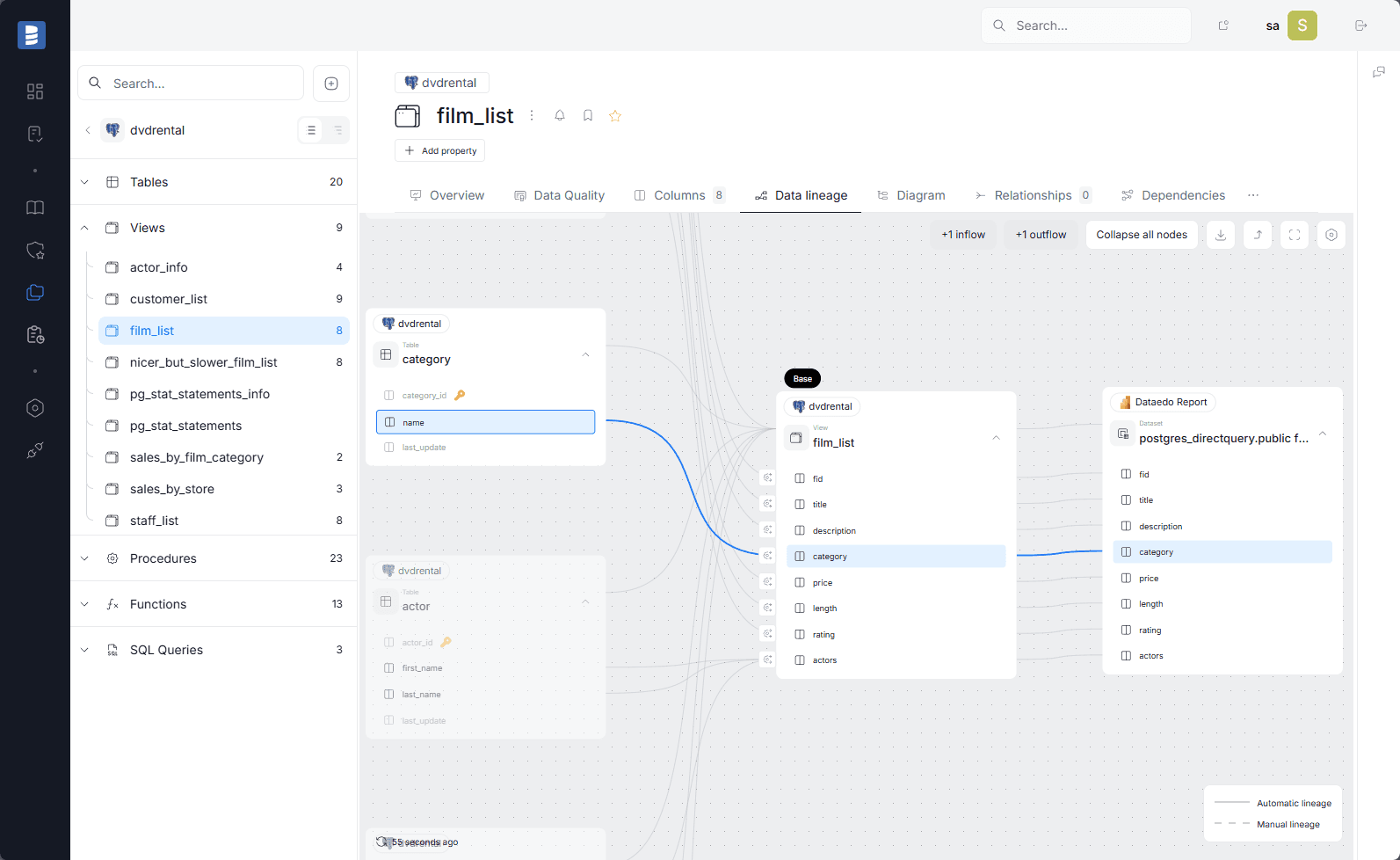
In practice, lineage is often one part of provenance. A lineage graph gives you the route. Provenance adds the history and trust context around that route.
| Lineage | Governance Context |
|---|---|
 |
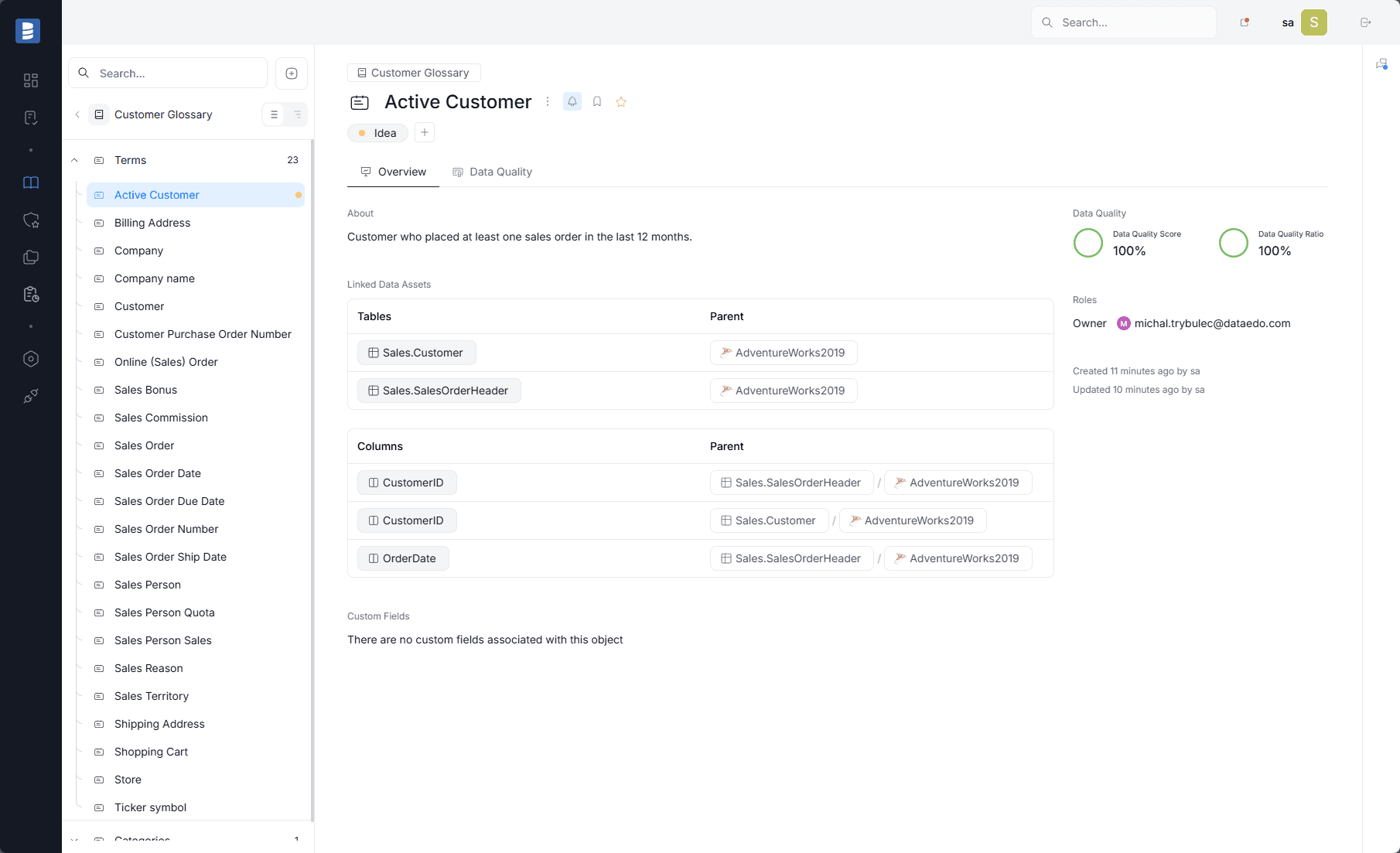 |
| Lineage view: trace a field through upstream sources, transformations, and downstream outputs. | Governance context: glossary-linked assets add business meaning and trust context beyond the flow itself. |
Why Teams Blur Them
The terms overlap because they all support the same broader business need: being able to trust data enough to use it, explain it, investigate it, and change it safely. That is why teams often slide from one word to another in the same conversation.
The problem starts when the overlap hides an important gap. Lineage is excellent at showing dependency and transformation flow. It is much weaker when the team needs the broader trust story around the data. A lineage graph may show a warehouse table feeding a BI dataset and a report, but it may not explain why the metric exists, which external controls apply to it, or what stewardship model supports it. Provenance is what points the team toward that broader context.
That is the main reason the terms are related but not interchangeable. Lineage is the path. Provenance is the path plus the surrounding history, meaning, and evidentiary context. Traceability is the ability to move through that path when a real question appears.
How The Difference Shows Up In Real Work
Consider a finance KPI that changes after a model update. Lineage helps the team trace which columns, models, and reports changed. Traceability helps them move backward from the KPI to the source fields. Provenance becomes relevant when they need to explain where the underlying numbers originated, what process generated them, and what controls or trust assumptions should exist around that path.
Or consider a transformation chain feeding a dashboard. Lineage shows the source-to-model-to-report route. Traceability helps the team inspect the upstream dependencies when something changes. Provenance becomes more important if the team needs to explain how the model was created, what historical artifacts matter, and what broader context should be preserved for governance or audit purposes.
The distinction becomes clearest during compliance or stewardship work. A steward may need to answer where a sensitive attribute came from and who is responsible for it. Lineage shows how the attribute moved. Traceability helps confirm each hop. Provenance asks for the wider evidence trail: origin, controls, definitions, and ownership context.
Column-level lineage view used to trace a field through upstream sources, transformations, and downstream analytical outputs.
How To Use The Terms Without Creating Confusion
The best practical rule is simple. Use provenance when the conversation is about origin, trust, evidence, and historical context. Use lineage when the conversation is about flow, transformations, and dependencies. Use traceability when the conversation is about investigation and the ability to move backward or forward through the chain.
Most organizations do not need a perfect philosophical debate about the terminology. They need stable definitions in the glossary so analysts, engineers, and stewards are not using the same word to mean three different things during governance, audit, or release work.
How Dataedo Helps Teams Operationalize the Practical Layer
Dataedo is useful here because it does not reduce the problem to a single diagram. It gives teams documented lineage, glossary context, ownership, related assets, and impact-aware metadata in one place, which is exactly the combination people need when provenance is the broader concept but lineage is the operational layer they use every day.
The platform can capture lineage in different ways and connect that flow to business terminology and stewardship context. That is the practical value in governance work. Even if a team uses provenance as the umbrella term, Dataedo helps document the parts of the story that teams most often need to inspect, explain, and govern.
Business glossary term linked to documented technical assets, giving governance and trust context beyond the lineage path alone.
Which Term To Reach For First
If the team is explaining a flow across systems, lineage is usually the right first term. If the team is explaining how much of the history or evidence trail can be reconstructed, provenance is the better first term. If the team is describing how far back or forward an investigation can go, traceability is usually the clearest choice.
The important thing is consistency. A shared vocabulary makes governance, release reviews, and audit work much easier than constantly renegotiating what each term means.
FAQ
Is data provenance the same as data lineage?
No. In practical use, lineage is usually the path and transformation view, while provenance is the broader origin and evidence story around the data.
Is traceability the same as lineage?
Not exactly. Traceability is the ability to follow data through the chain. Lineage is the documented chain itself.
Should teams use one term or all three?
Use all three only if your organization needs the distinction. Otherwise, define one primary term in your glossary and keep the others as supporting definitions.
Does Dataedo focus on provenance as a separate module?
Dataedo’s documented strengths are catalog, glossary, lineage, ownership, stewardship, and impact analysis. Those are the practical building blocks teams use to document the context around data flow.
Final Takeaway
Data provenance and data lineage are related, but they are not identical. Lineage is the documented path of data flow. Provenance is the broader story that helps you trust that path. Traceability is what lets you follow it.
If you treat them as the same thing, you will probably under-document your data. If you treat them as separate but connected concepts, you get a clearer governance model and a more useful metadata layer.
-> See how Dataedo helps teams connect glossary, catalog, lineage, and impact analysis so data is easier to explain, trust, and trace. Try now or book a demo.

