


 Michał Trybulec
PostgreSQL powers many analytics environments, from operational reporting to domain-level data products. As PostgreSQL usage grows, data dependencies become harder to track. A single column change in one view can affect transformations, semantic models, and executive dashboards.
Without lineage, teams usually find dependencies too late, during incidents or release rollbacks.
In this guide, you’ll learn:
- what automatic PostgreSQL lineage means in practice,
- what it typically covers well,
- where automatic lineage has limitations,
- and how Dataedo helps teams use lineage for safer changes.
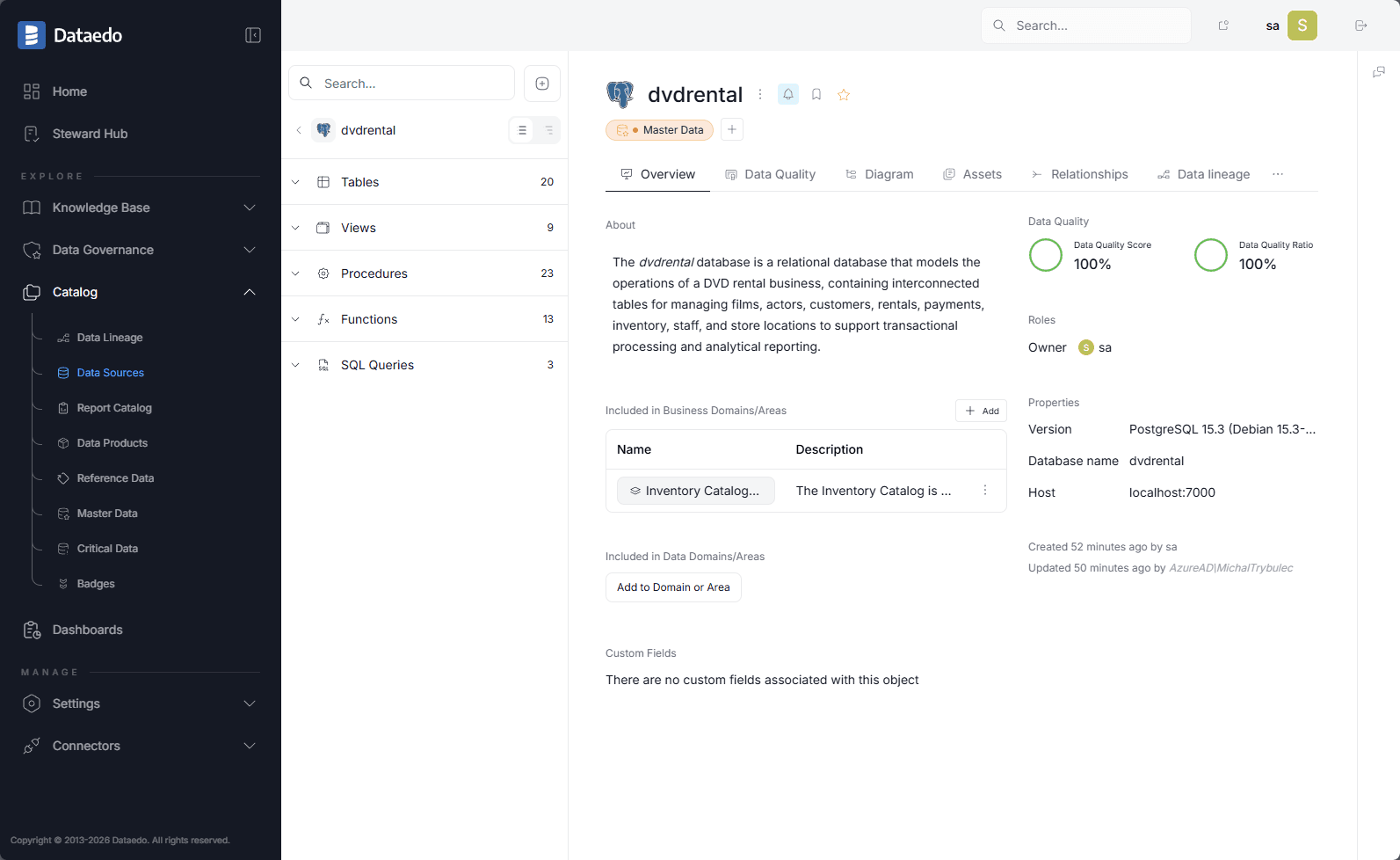 PostgreSQL asset context with lineage, ownership, and governance metadata in one view.
What Automatic Data Lineage in PostgreSQL Actually Means
Automatic lineage is the ability to map data flow between objects without manually drawing dependency diagrams.
In PostgreSQL environments, this usually means tracking how data moves:
- from tables to views and materialized views,
- through transformation logic,
- into downstream analytical assets.
At a practical level, lineage should answer:
- Where does this field come from?
- Which objects depend on it?
- What downstream assets are at risk if we change it?
Why PostgreSQL Teams Need Automatic Lineage
In mature environments, manual dependency mapping fails quickly because:
- schemas evolve frequently,
- transformations are distributed across views and scripts,
- logic is reused across multiple teams,
- reporting layers depend on shared base objects.
When lineage is missing, common outcomes are:
- slower root-cause analysis,
- risky releases,
- repeated KPI inconsistencies,
- high reliance on tribal knowledge.
How PostgreSQL Lineage Is Built in Practice
Automatic lineage is typically built by combining:
- metadata scanning from PostgreSQL objects,
- SQL parsing of transformation logic,
- dependency mapping between source and downstream assets.
In Dataedo, this parsing layer is powered by an in-house proprietary SQL Parser that analyzes PostgreSQL scripts and resolves dependencies at object and column level.
For investigation and validation, teams can open lineage details and review the underlying SQL script linked to a dependency path.
Lineage quality depends on three factors:
- metadata coverage,
- SQL complexity,
- consistency of naming and object design. This is why governance discipline (descriptions, ownership, naming standards) directly improves lineage usability.
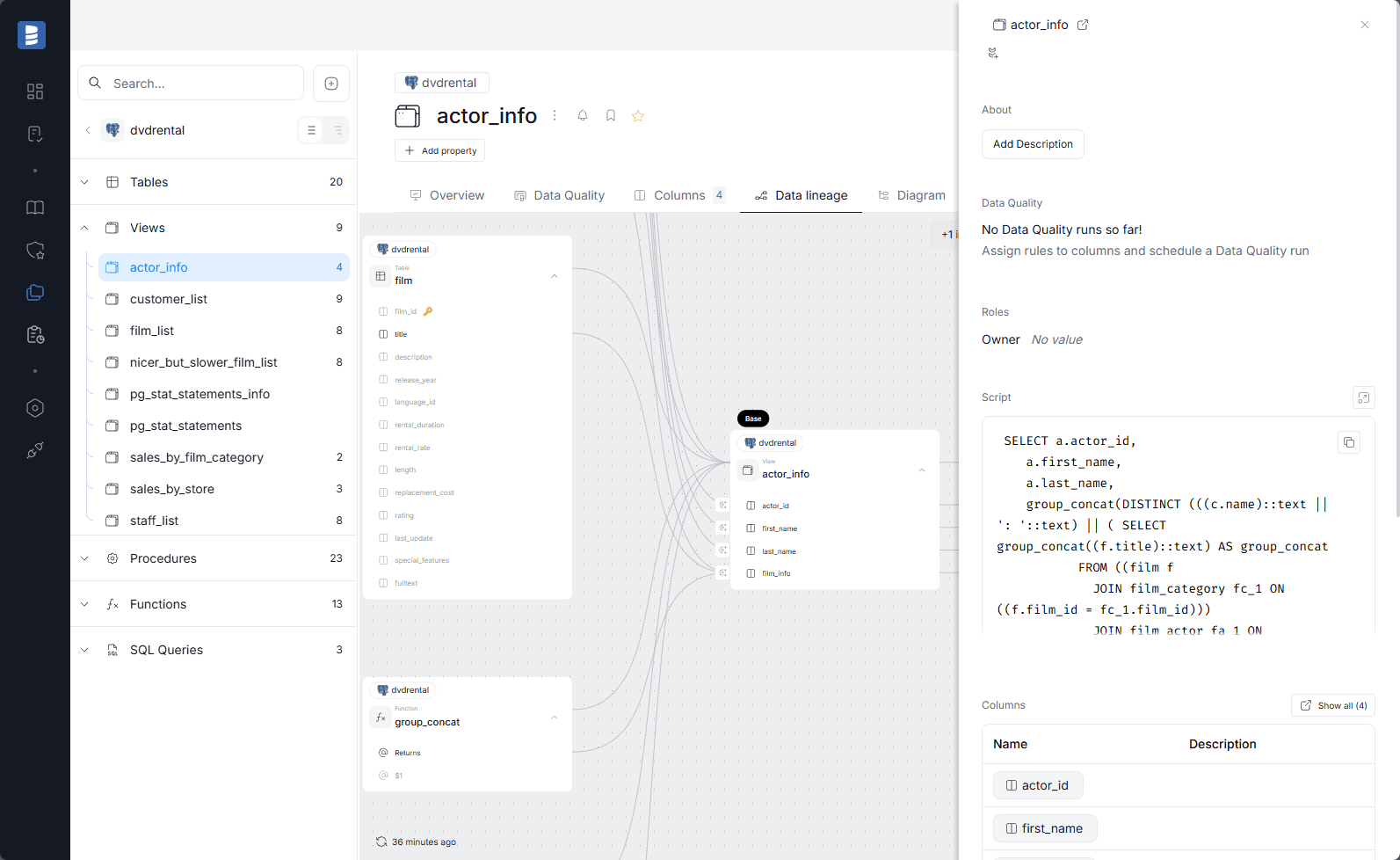 PostgreSQL view script analyzed by Dataedo SQL Parser and mapped to resulting lineage dependencies.
Lineage Coverage: What Usually Works Well
Tables, Views, and Materialized Views
For most PostgreSQL analytics setups, this is the strongest lineage area.
Teams can usually trace:
- object-level dependencies,
- key upstream/downstream relationships,
- critical path from source tables to reporting views.
Column-Level Flows in SQL-Based Transformations
Where SQL logic is clear and parseable, column-level lineage gives much better change safety.
This allows teams to assess whether a specific field change impacts:
- derived columns,
- semantic model fields,
- report-level measures.
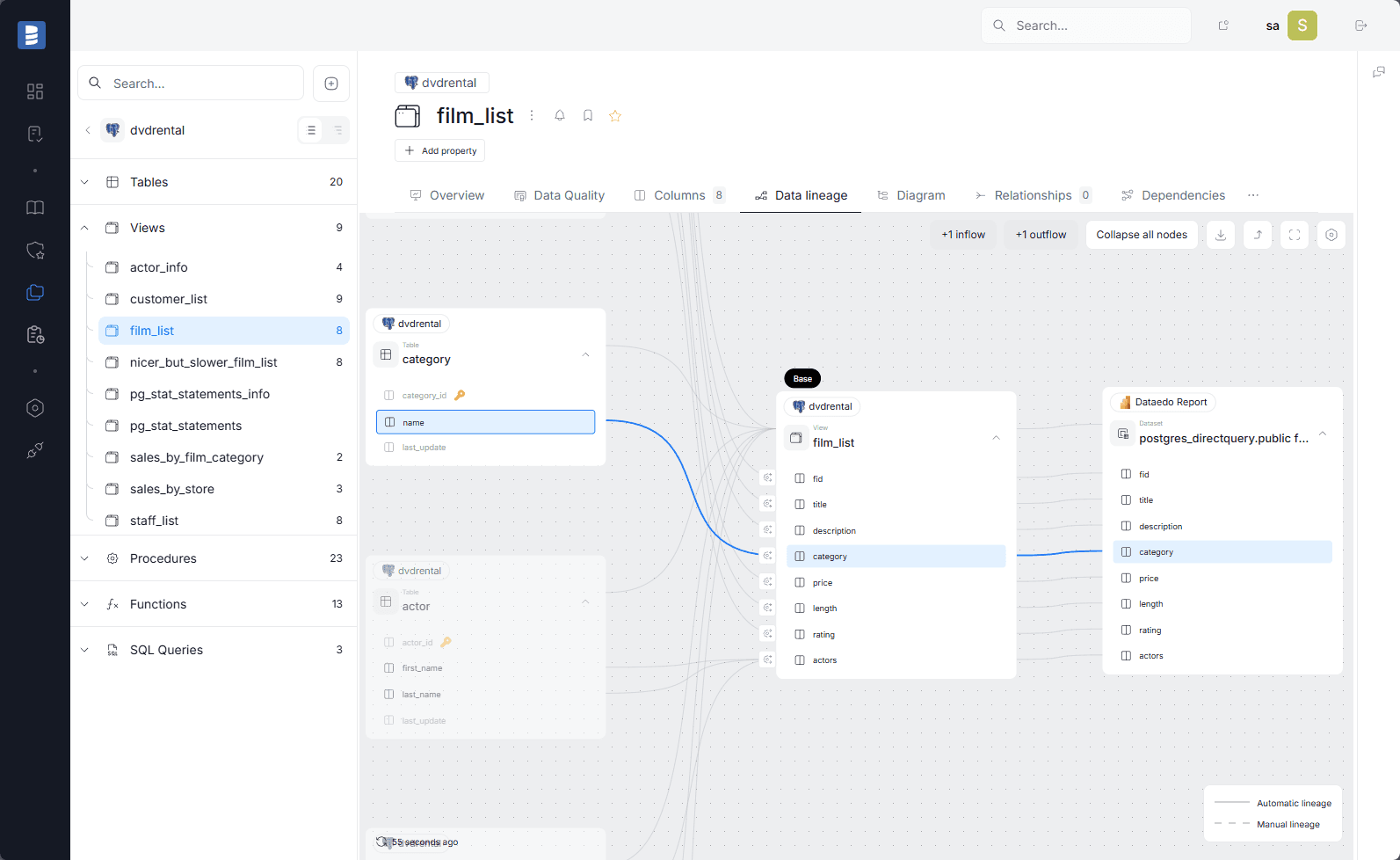 Column-level dependency flow from source fields through transformation layers.
Procedures and Functions
In many PostgreSQL environments, not all transformations live in views. Business logic is often implemented inside:
- stored procedures,
- SQL and PL/pgSQL functions,
- data preparation routines,
- calculation logic reused across reporting layers.
This means lineage limited only to tables and views does not provide a complete picture.
What Lineage Covers in Procedures and Functions
When SQL inside procedures and functions can be parsed, lineage can identify:
- source tables referenced inside the body,
- columns used in calculations,
- downstream objects that depend on function outputs,
- transformation logic embedded in reusable database routines.
This is particularly important when:
- critical KPIs are calculated inside functions,
- transformation logic is abstracted away from reporting views,
- procedures orchestrate multi-step data flows.
In these cases, missing lineage at the function level creates blind spots in impact analysis.
Cross-Layer Context (Source to Analytics)
Lineage becomes most useful when technical dependencies are connected to business context:
- glossary terms,
- ownership,
- criticality and quality signals.
This turns lineage from a diagram into a release decision tool.
Object-Level vs Column-Level Lineage in PostgreSQL
Object-level lineage helps with architecture visibility. Column-level lineage helps with production safety.
Use both:
- object-level for broad dependency discovery,
- column-level for change impact analysis on critical fields.
From Lineage to Impact Analysis
Lineage is most valuable before change goes live.
For PostgreSQL releases, use lineage to review:
- which assets are impacted,
- who owns those assets,
- which KPIs depend on affected fields,
- where validation effort should be focused.
Teams that operationalize this step reduce post-release incidents and shorten recovery time.
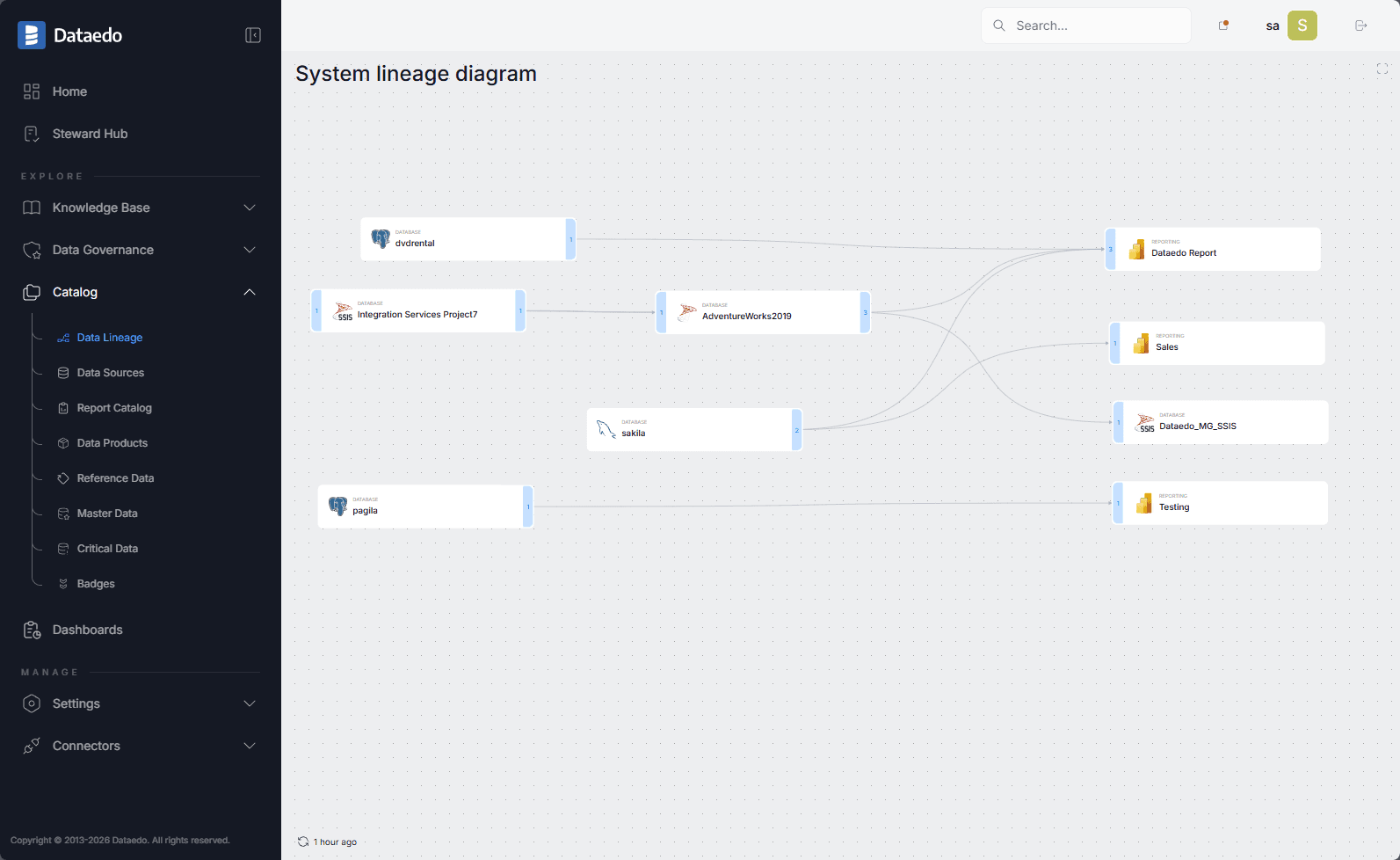 Lineage-driven impact analysis workflow used before PostgreSQL schema and transformation changes.
How to Keep PostgreSQL Lineage Reliable Over Time
Lineage quality degrades if metadata quality degrades. Keep it operational by:
- refreshing metadata on a predictable cadence,
- documenting transformation intent on views/materialized views,
- maintaining object and column descriptions,
- assigning owners and stewards on critical assets,
- reviewing lineage impact in release workflow.
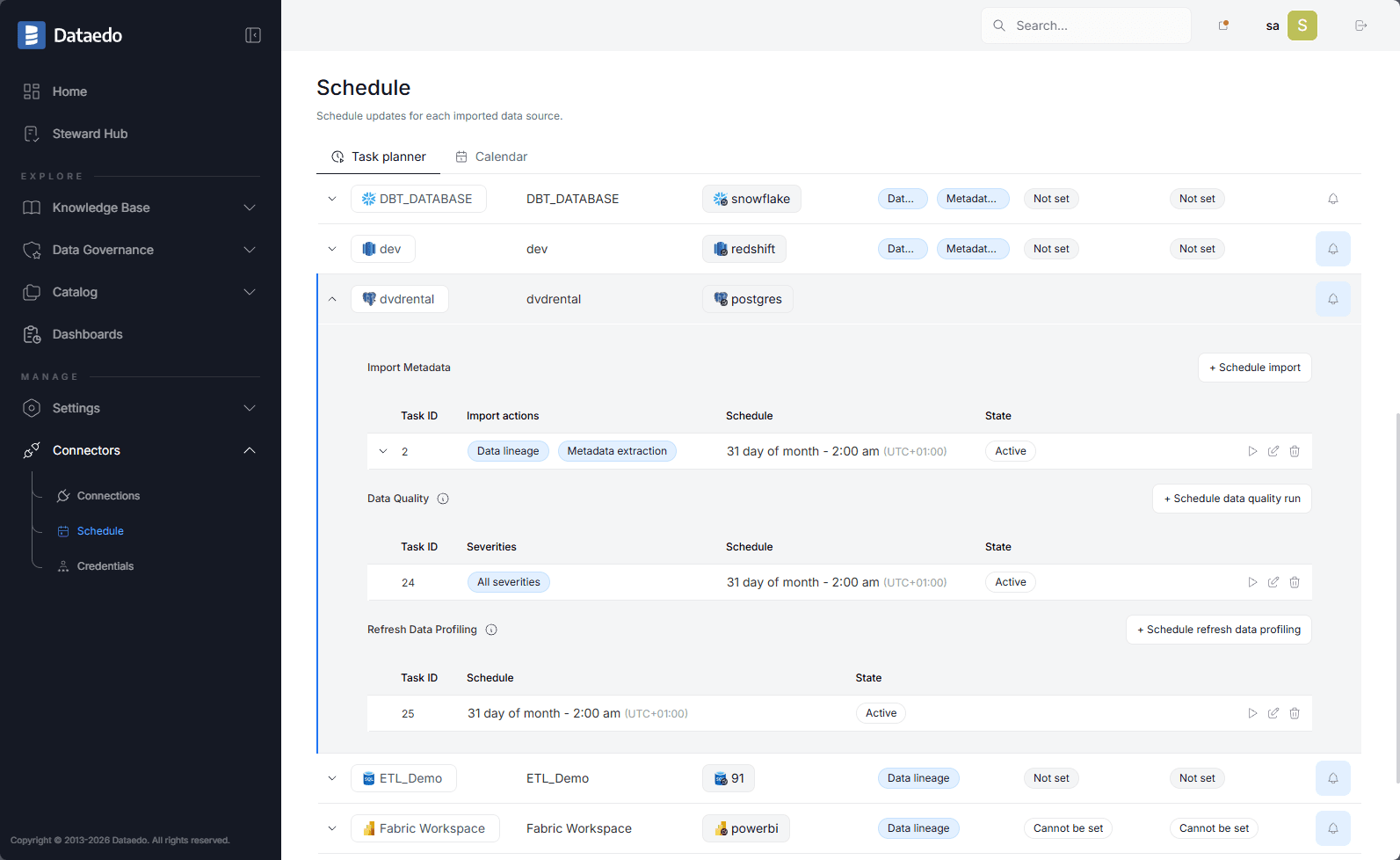 Metadata and lineage refresh settings used to keep PostgreSQL dependency views current.
How Dataedo Helps with PostgreSQL Lineage
Dataedo helps teams move from partial visibility to operational lineage by combining:
- PostgreSQL metadata cataloging,
- end-to-end and column-level lineage,
- proprietary SQL Parser support for PostgreSQL transformation scripts,
- lineage details with script-level context for dependency verification,
- glossary mapping for shared KPI meaning,
- ownership and stewardship metadata,
- impact analysis before release.
The result is faster troubleshooting, safer schema changes, and stronger trust in analytics outputs.
Frequently Asked Questions
Is object-level lineage enough for PostgreSQL releases?
For high-level architecture views, often yes. For production schema changes, column-level lineage is usually required.
Can lineage replace documentation?
No. Lineage shows dependencies, while descriptions explain meaning and intent.
How often should lineage be refreshed?
At least in line with your schema and transformation change cadence.
Does lineage help with onboarding?
Yes. It reduces dependency guesswork and helps new team members understand data flow faster.
What is the biggest mistake teams make with lineage?
Treating lineage as a one-time map instead of an operational practice tied to release workflow.
Final Takeaway
Automatic lineage in PostgreSQL is not just a documentation feature. It is a control mechanism for reliable change.
The most effective teams combine lineage with ownership, glossary, and quality signals to make release decisions with confidence.
See how Dataedo helps teams map PostgreSQL lineage and run impact analysis before changes break downstream analytics. Book a demo or try for free.